
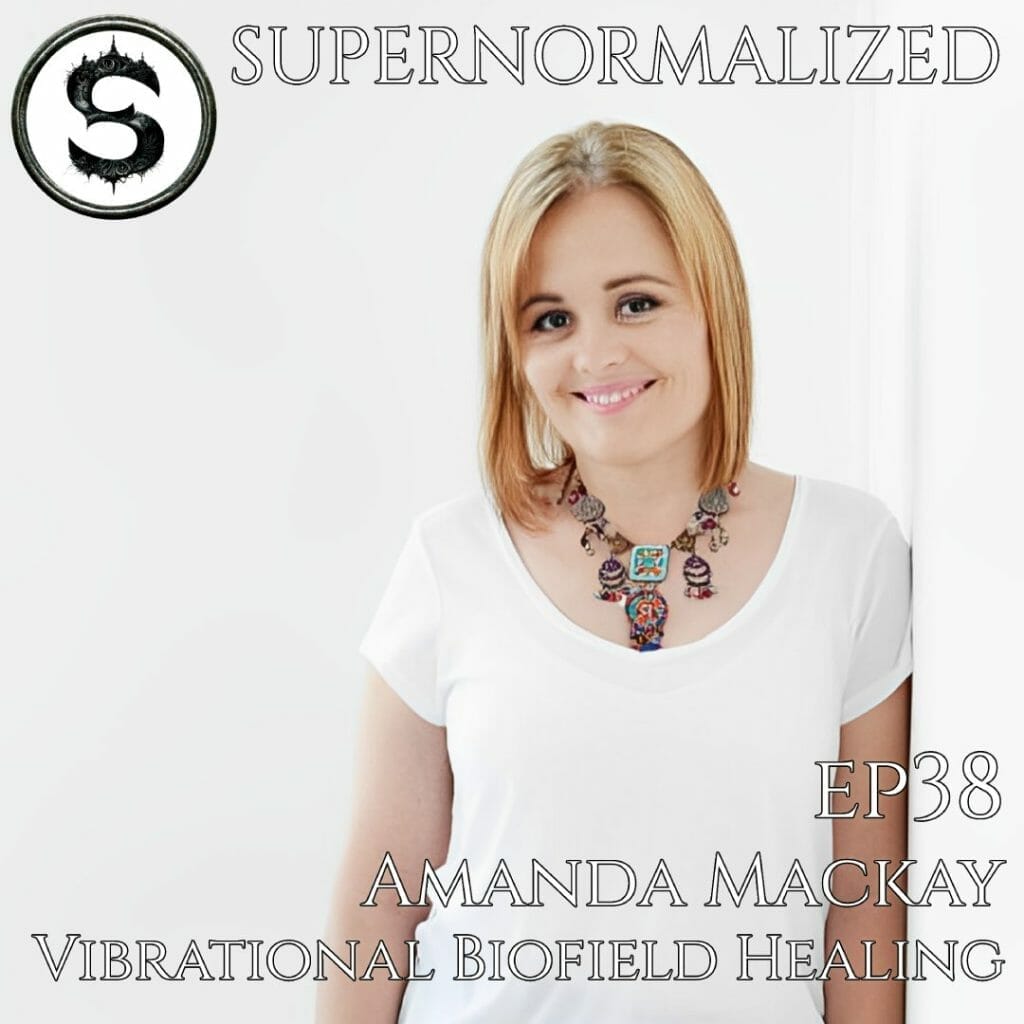


Today on supernormalized you’ll meet Amanda Mackay, a second-generation healer, rooted in self-awareness, wellness, intuition, and healing, a path that for her extends far beyond a job or a passion—it’s her very essence. From her healing space in Brisbane and to clients worldwide, she helps harmonize disruptive emotions and thought patterns, believing firmly in the transformative power of balanced energy. Drawing from her own healing journey, she aids others in achieving emotional well-being through sound and the release of limiting belief systems. With over 30 years of meditation practice under her belt, Amanda integrates this spiritual discipline into her daily life. At the heart of it all, she deeply cherishes her relationships with her four children and their beloved pups, proving that Amanda’s role extends beyond that of a healer to a nurturer and a lover of life.
Dear listener, I truly appreciate your company on this audio journey. If you’re enjoying Supernormalized, I kindly ask for your support in reaching more curious minds like yours. Please take a moment to give us a 5-star rating on your podcast app. Your rating will help us gain visibility and show the algorithms that our conversations are worth sharing. Share your love for the show with your friends and let them know how much you enjoy Supernormalized. Thank you for your support!
Transcript
(00:00)
Because if you're willing to say I'm changing this, I want to do this differently, it's vulnerable. But how much strength does it take to do that? Welcome to Supernormalized, the podcast where we challenge the convention, break boundaries, and normalize the supernatural. Join me, CeeJay, as we explore uncharted realms of existence and unravel the mysteries of our universe. If you have an unusual knowledge or a unique story you'd love to share, reach out to me at supernormalizedproton.me directly. Let's make the supernatural the new normal today. On Supernormalized, you'll meet Amanda Mackay, a second-generation healer rooted in self-awareness, wholeness, intuition, and healing. She's on a path that for her extends beyond far beyond a job or a passion; it's her very essence. For her, healing and her healing space in Brisbane and to clients worldwide, she helps harmonize disruptive emotions and thought patterns, believing firmly in the transformative power of balanced energy. Drawing from her own healing journey, she aids others in achieving emotional well-being through sound and the release of limiting belief systems. With over 30 years of meditation practice under her belt, Amanda integrates this spiritual discipline into her daily life. And at the heart of it all, Amanda deeply cherishes her relationships with her four children and their beloved pups. Proving that Amanda's role extends beyond that of a healer into a nurturer and a lover of life. Dear listener, I truly appreciate your company on my audio journeys. Now, if you're enjoying Supernormalized, I kindly ask for your support. Can you please help us reach out more curious minds like yours? Can you do that by sharing the show to your friends and family? And if you can, jump on the podcast app you're using right now. And if you haven't already, hit up the five-star ratings so that others see this is a conversation worth sharing. Thank you for your support, Amanda. Welcome to Supernormalized. Thank you, CeeJay. It's really lovely to connect. It's really lovely to connect with you too. We found each other, and and it does look like we could have a really good talk here. So I'm I'm really glad to have you on the show. Thank you. I love a good chat. So yeah, it's gonna be great. So you've been doing this for like over 30 years, and you've been through your own healing.
(03:00)
Journey. Obviously, that's a bit of an origin story for all of this. So, do you want to go through that? I mean, what sort of person were you before all of this? Well, this goes back a very long way. So, my dad worked as an energy healer when I was a child. So, I was introduced to this really, really young. Right. Even at like seven years of age, I was being taught different things about energy and healing and those types of things. So, it's sort of a progression for me more than our before and after story. But when I turned 18, I just finished high school, just finished college, and I was at this function and I was really overwhelmed, really nervous, felt really, really uncomfortable, and I could feel this. I guess you would call it like a survival response in myself to try and, you know, manage emotions, even though we didn't have the language around it back then. Yeah. To express it, and I felt this behaviour in myself that was not me, so it was more like my mum, who was quite an emotional sort of person, and once I realised that, it was a learned behaviour. I made a commitment to myself to be aware of it and to change those things, and I didn't really understand then that that would be my life's work. So that's where it consciously started for me. So it's just 18. Just turned 18. Wow. And wild. Yeah, growing up with a dad that's so supportive of everything and being an energy healer himself, that is just totally excellent. Yeah, it's a it is really interesting because dad worked in healing for nearly 30 years, and he stopped doing that work, and now he comes, he's coming and learning the tuning forks with me, so teach people to become practitioners with tuning forks, and it has even changed his healing to be even more expansive and deeper, even better now than what they were all those years ago, because we progressively work on things as a family as well. So even my children, and we work with my granddaughter, and so we have multi generational healing that we do just within our own family. Must be a very healthy family. That's excellent. Yeah, yeah, it's really good. It's um, it's nice to be able to have those conversations too, where we can work through things, and it's a safe place. It's okay. We know what we're actually doing is healing each other more so than you know getting into those sort of well-worn arguments.
(06:00)
And things like that that people tend to do because it's the only way that they know how to communicate or how to behave. So most of my work is how to change those limiting beliefs that keep you in those particular patterns or behaviours that are just recycled. And it's like you can't get out of that groove, and it's like jumping the needle on the record and playing a new tune. And we change things. Yeah right. Okay. So okay, so you've got a very, very aware and sensitive family, and did you find that growing up in that you had a lot of support just for general life and a school of hard knocks experiences? Did that really help a lot? Well, it's interesting because even though we were into the healing and the meditation, my parents had one of the first health food shops here in Brisbane. Right. It was still a very new way of life for the family, so it wasn't all smooth sailing. You know, we still had our you know family patterns to break and things to work through. Right. Um, like every family, you know, it's not like we're all just sitting on a cloud and nothing to do. You know, we still had things to work through, and it was those things that really did help me with the work that I do now. Right. About healing and understanding what it's like to go through painful experiences, you can't really help other people. Not not really, you know, deeply compassionate way and a non judgmental way because, like, I've been there. I know what that pain feels like. I know what it's like to you know think, what's it going to be like on the other side of this healing? Yes. So I think every every human being has that up and down journey, and I've had some very big life experiences outside of the family as well. That right. Being divorced and raising children on my own and those things they're very challenging. You know, they're they're big things to go through too. So, and my mum died many years ago, so we had our own share of things. It's not um, it's not like we don't have challenges, but when you do the healing, it's how to get through those experiences without the big lows. You know, how to manage the emotions and work through the experiences a bit more balanced. Right. Right. Okay. So discovering that balance for yourself, did you say? Give me an example of say.
(09:00)
How you found a method for yourself that actually, first of all, helped you through, say, one of your experiences. I mean, is there something that just really stuck out for you? I mean, you do mention that you were an avid meditator. What type of meditation were you doing, and how did that help you? For example, well, I actually started meditating really young, and when I was about seventeen, I started with like guided meditations. So it was like an individual guided meditation every week, and then later on, I did more group. And then I just started doing my own because I've been meditating with me for so long. It was really easy for me to then start my own type of meditation. You know, I do all the modern stuff like Joe Dispenza and listening to Eckhart Tolle and doing some of their work as well. Yeah. Not just relying on my own because you need to be expanded a lot more. So meditation helped hugely for me. It's been probably one of the most consistent things in my life. Thing that I have continued on a daily basis, whether it's a long meditation or a really short one, or just being very aware of what's going on, looking at a tree, you know, and just being really present can be a really beautiful meditation. Yeah. The big things that got me through, I would say, two really important ones were my mind was always running, so always with a lot of thoughts. And so I learned a technique to stop the thoughts as a separate kind of energy, not thinking that they were me, because I I was doing a meditation one day, and I was focusing on what I was doing, and then I could hear this voice still, and it was like my first realization of it's actually separate to you. You the the thoughts and the chatter are not you. It was like there was a TV going on in the background as well. So that was really important because that helped me understand that I could stop the negative thoughts. I could stop the chatter that wasn't helpful. It's a process, but having the awareness first was really, really helpful. So that helped me a lot, and then the other key thing was forgiveness. And I I still remember the moment I was driving, and I was down in my street coming home, and I had been divorced for many years. But anyone who's been divorced knows it.
(12:00)
Take some time to move through some of those issues, and the idea came to me that it wasn't him I needed to forgive; it was myself, and it was like a lot of the pressure let go, and a lot of the overwhelm. And you know, I should have done this. Why did I do that? Why did I see this? Why wasn't I aware of that? It's like I needed to forgive myself that I did do the best that I could at the time, and that's all there is because you can't go back and change. And so, forgiveness has been a really big thing for me in my own healing. Hmm. So forgiveness of yourself, and then maybe forgiveness of others as well, because obviously a lot of people, when they're doing things which aren't so palatable when it comes to life experience, a lot of their stuff is coming from their own trauma too. It it really is. That's the only place it's coming from. And if you can see that and know that they were actually doing their best, even if it wasn't that flash, that was their best. That's right. They couldn't do anything else. It actually wasn't possible. It's a hard one for people to understand or even try and do forgiveness. It's a big thing because some people. I know some people don't want to touch it. They just really don't like the idea of it because they think the other person's getting off the hook, but they're not because that person has to live with themselves. And they have to go through and work through their own pain and live in their own limiting beliefs. And if you can understand that that they're living in their pain, it's much easier to look at and say, "Oh, yeah, I see that." Rather than expecting them to be different because they can't, they don't have the conscious awareness. If they did, they wouldn't be doing that. That's right. That's right. Yeah, yeah. I often say to people when they they come to me with something they're stressed out with, and everything I say, "Look, the bottom line here is you're expecting them to be who you are, and they're not." Or what you want. Or what you want. Yeah, that's right. Yeah, but they're like so and so is behaving in this way because that's them behaving in that way, but you are not happy because they're not meeting your expectations. Yeah, they're not expectations. Yeah, the expectation is from your own wounded anyway. That's right. Yeah. I want you to be like this so I can feel better about myself. That's right. The only one who didn't feel that. Yeah, the worthiness is what it comes down to feeling worthy. Yeah, yeah, it's a hard one there because you think people should all make the right noises and make you feel happy all the time, but they don't. It's not their job. It's not. It's an education process.
(15:00)
For ourselves, all learn that thing. Yeah, they didn't. I know that got the contract. So this drove drove you towards a you know a path of more self awareness and understanding, connectedness. How did that roll out for you, for yourself? Oh well, it has been a journey for sure. And I was taught from a very young age that if you have an issue with someone or someone annoys you, you might want to look at yourself. That it's somewhere in you. So when you have that really important key piece of information, it does maybe not always make it easier, but have the awareness to say, okay, well, where is this particular behaviour sitting in me? Why am I reacting to that? And it's important to know that it might not be expressed in the same way. So it might not look the same. It might not look like the same behaviour, but there's something in you. So I'll give you a quick example. If somebody gives you a gift, and they expect you to respond in a certain way when they give it to you, they want you to be grateful. They want you to use it how they envisage it. And you're going to have to remember always, it's amazing thing that they gave. I mean, conditional giving, right? Yes. All over the place, so it's not a real gift. A gift is where you give something and you have no attachment to what happens after that because it is no longer yours. Conditional giving is you're giving it, but you still have the attachment because you want them to do or say or whatever it is in a certain way. So I noticed that in other people, but in myself, the conditional giving was within my own family. It didn't look like conditional giving, but I gave everything to my children. All my time, my energy, I really put myself on the back burner for a lot of years because I have four children that were really close to get together in age. So we're busy. It was full on, and we had a lot of activities in school, and you know all the issues that go on with raising children. And so I put everything into them. Which on the outside looks really lovely, and you know I'm such a great mom, and you know they do tell me now that I'm a great mom, so that's nice. So all young.
(18:00)
Adults now, but um, in that is a it's like being the mother who gives everything, doesn't take anything for themselves, and there is that kind of thing in there like I need the acknowledgement. Now I wasn't a demanding, I need this acknowledgement kind of thing, but anybody who's raised kids on their own, or even with a partner who may not be present, knows that it's exhausting, and you just want someone to say thank you. It's like I do all of this. Why am I? Why am I not getting a thank you? So that's the little piece of conditional in there. Because you still want something out of it. Yeah. You know what I mean. So it's subtle, but it's very real. And when I realized that, and then took a step back from it and thought, they don't really need to do any of that. That's not up to them to do that. It's up to me to feel good with what I've done. It was enough. Again, it was enough. What I did was enough. Do you know what I'm saying? It's like again, I did the best that I could at the time. I'm very little sleep. You know, and that's just it's okay. So I just to take that piece out of it where it's like I didn't feel like I ever sacrificed for the kids because I was very willing to be there and be present and do the best that I could. But there's still that learned behavior sitting in the background of, you know, because I guess that's what I learned from my mum. You know, the I should be given something emotional from you in return, and I didn't see it in myself because I didn't act like my mum did. But it was a learned behavior again, same thing. My mother has been one of my greatest teachers. My dad's been one of my greatest teachers. My children, even my husband, what you would say, one of my best teachers, because they give you this almost like a resistance or challenges, and then you are then standing in front of it, saying, "Okay, how am I going to respond in this? Am I going to react? Am I going to respond? Am I going to let it go? " It's all about choice and how we actually behave and see ourselves, and again, comes back to worthiness. Am I going to stay in this reactive thing?
(21:00)
I'm gonna stay in this push pull, or am I gonna think? No, I'm actually worth something that's healthier than that. Something that's good for me rather than staying in this resistance. So I hope that sort of answers what you're saying. Yeah. Because it what we one of our biggest challenges can be really subtle and unconscious. Right. So that little tiny piece of conditioning that's you know in the act, if that if that is not going as well, that can actually build up into resentment. Oh yeah. Yeah. Absolutely. Yeah, I think anyone listening almost comes from so. Yeah. Anyone listening who has a parent that expects something from them knows exactly what I'm talking about. And they distance themselves. Anyone who's like you're obliged to do this. Yeah. Oh, that's that. No, that's uncomfortable. I don't like that. I don't want to do that. And we all have parents, so all caregivers, so we we all understand what that is actually is. We've all experienced it somewhere. I have a lot of resistance to obligations myself. I like to do things because I like to do things. Yes. And that's actually a resistance as well. Oh no! You caught it. Oh, you know. I know. Ceejay, because I have this same feeling. How do we get around that? Then I don't know. Well, it's interesting. I had this conversation with my dad the other day about the resistance like that, and he said it's just let it go and let it play out. Simple. You know, so simple. Yeah. It's like when you have the resistance, it's what magnetizes that experience to you. Oh, that's. You know, because we've got that emotional feeling or condition sitting in the field or in the body. Yeah. And it's like a magnet that every experience comes and gives a little bit of a nudge and say, "Hey, you've still got this here. It's still something to look at." So that's why you keep getting the same experience. And the way Dad said it was just so simple. Just let it play out. Just watch it. Yeah. Yeah. There's a bit of gold. I I I have a bit of a belief that where the the the life experience that we are manifesting is that it is because we are actually like a antenna for information. We pick up information from you know the field. And you know, as we as we grow and change, and the onions peel off.
(24:00)
Layers peel off. We are broadcasting different sort of frequencies, and those frequencies are what attract all the experiences towards us. So that that resonates really nicely with what you just said there. So, yeah, absolutely. When you change the frequency, you attract a different frequency back. When you let go of those limiting beliefs or ways of being, you then get the more expansive frequency back. Yeah, yeah, right. So, when you are working with clients with all this understanding, where do you start? What do you do? How does that work? Okay, so they usually come in and sit down, and I just ask them what brought them to the session. Right. And they'll say they've got this going on, or that pain, or someone recommended them for a particular thing, and I can tell by their energy and the way that they're talking what we're actually going to be working with. So it doesn't really matter what story they tell me. I can feel the vibration of what needs to be healed in the voice, in the body, and sometimes the, you know, in the field. And I get a real sense of what we're actually working with. Right. It's not always what they say. It's sometimes what they're not saying as well. Very interesting. It sounds like tuning into the like the aura, for another word. You know, I actually spoke to a lady yesterday, Terry Lay, who's like an expert in auras, and she she does that too. She said exactly the same thing you said, but she sees it as all colours. Yes. And energies, and so I said, "How do you do your sessions?" She, "I just sit there, and then people start talking. They get their vibrations, and then I work out which way I'm going to go." Like that's exactly what you said. Yeah. So interesting that you both said something so similar. Now you're both working in vibrational energies, and both healing with vibrational energies. After that, so once you've actually diagnosed or seen a path for for somebody that needs healing, what happens next? Okay, so the client lies on the table, and I primarily work with tuning forks. So it's a sound healing tool. It's a bit more, um, like a laser than using a singing bowl. Singing bowl is like getting a hug. Tuning forks, you don't hear them as much like a bowl or a drum or a gong, but they're very precise in essence. It's a really beautiful instrument. So with a tuning fork, you can actually feel the resistances and emotions sitting in the field or in the body. So when you activate a tuning fork and you hold it in a person's field, which you referred to earlier as aura, you.
(27:00)
And actually feel those resistances that we were talking about. It's like it comes up against it, and it's like you're just feeling like you can't quite move it just yet. And you keep activating the fork. The vibration from the fork is like warm water, and the emotion or the resistance is like a sugar cube. And when the two meet together, the vibration melts that emotion like a sugar cube. Yeah, and so that's what I was talking about before. Is that's like a magnet. That's what keeps attracting the same experiences. So I'm sure everyone that's listening would understand that they've tried to break habits and they've tried to bring in new ways of being, and it's they say, "I, why can't I change? " It's frustrating. Feel like I've done this. I've written my affirmations, I've journal, you know, I've got my crystals, or I've, you know, been to this healer or whatever it is. It might be that there is a particular emotion sitting in the field that hasn't yet fully been healed. So when we work with those, balancing those emotions in the field, and then not like a big neon sign with a magnet going, yeah, come and give me more experiences of this. People have a different experience of life. They can see things differently because those what most people term negative experiences aren't coming in anymore. So, people don't need to be a really big believer in sound healing before they come in. A lot of people come in as a recommendation. They're like, I really trust this person, and they said that your work is great. So, you know, this is why I'm here. These are the things that I want to work on. And so we go through a process working with someone for like six weeks is really the best because it can take them on this journey of healing that you can't always do just in one session. And so over those weeks, I'm giving them some understanding of their behaviours and where it's come from. And then we do healings around it, and they can see the progress. Then, you know, people sit in the in the chair and say, "I had all these things go on this week, and like that would be enough for a year, you know, and that I handled it really well. You know, I had a moment, but I was able to regulate my emotions really well. And that's really what we're after. It's not like you're never going to feel.
(30:00)
Again, it's not like you're never gonna get upset. You still have these emotions, but it's when your something comes into your experience, you're not dropping the ball, you know. You're not getting angry or crying or feeling overwhelmed. You might for a moment, but it's not stretching into days or weeks or months. It's coming back into your natural balance really quite quickly. So it's really lovely to watch people go through that process and then sit there with a big smile on their face saying, "Thank you. This is really amazing. I feel like a different person." Right. You know, I was at the Mind Body Spirit Festival, probably a year ago now, actually, and someone came up who had been a client and just said, "Thank you. It was life changing." Awesome. You just testimonial now. And then they just, you know, enjoy the rest of the festival. So it's not, you know, some people come for a long time because they love just going deep and deep into the healing, and some people will come for a short time. Right. They might come in for a session and walk out going, "Yeah, that was relaxing. Don't really know what happened there," and then they'll ring me and say, "You know what? Since that session, I haven't had that back pain that I had for years, or this sharp pain is not there anymore. I think it had to do with the session. I want to come back." Yeah. So it's not always evident on the day of what's going on, but it changes your vibration. Is no doubt about it. I've seen with other healers that when somebody buys a session for them, they're usually hard skeptics, and they come in and they're like, "Oh, this is not gonna work," and then they go through a session, and often they come back and go, "Yeah, that worked." Yeah, you even had that. Yes. Certainly. Yeah. Yeah. Some people come in and you can see the resistance. Like I was right here. Yeah, yeah. They say it's good, but I don't know about you. So. And then they have a session. Oh my goodness. Yeah. That was amazing, and then become a, you know, a client that comes in, maybe regularly or every how often they feel it or they've got this going on, and then they'll come back in for that. So, yeah, it's really nice. Yeah, they become your best clients, the end of it. Yeah. Yeah. It it really is. Um, it feels like a privilege. Feel to work with people, and they trust you. Yes. Because they're talking.
(33:00)
To a stranger essentially, yeah, just deep life stuff. Yeah, but they feel safe in this space. That they're not going to be judged or criticised. I don't have an opinion on what it is that they're expressing. Yeah, just the fact that okay, well, that's something that we need to heal. It's that simple. Right, right. So all those negative thoughts, all that self-criticism. If you all can just look at that from now on as just something that needs to heal. It's not negative. It's not like you're bad. There's no, oh, I'm not this, or I'm not that, or why can't I be this? There's something in there that needs to be healed, and if you can approach it like that, it's like a weight lifts off you. Right. Yeah, it's a it's a lot a lot kinder. It's just like oh, this is an exploration. It's fine what this is, and let's let that go. And it's not and letting go is um what what we do in our work. We're the ones who are facilitating the letting go. Client needs the willingness. We have the tools to help them do that, so they're not alone in it. It doesn't have to be hard. I think that's one of the things that I've learned. It doesn't have to be hard. You just give yourself that kindness that you would give to somebody else. So this is just something I need to heal. Just something I wasn't aware of last week or yesterday five minutes ago. Whatever it's. I didn't know that and until now, and now I can let that go. It's like not living in the past or what you weren't, because you don't know until you know. It's usually in the unconscious. It sounds like you're decoding elements of people's knots in their soul. They're learnt behaviours mostly inherited emotions is how I describe it. Because I've worked with like several generations in one family, not including my own, but other people, and you can see the same energetic pattern through all the generations. But they're expressed differently. It might be a different behaviour that they're expressing, but it's the same feeling. It's the same vibration underneath. And it's really great working with multi generations because each session helps the other people. When they're all coming for sessions, and you can work on those deeper patterns, it's very interesting. Have you?
(36:00)
The scene when you've been working with people, someone that's coming that's, you know, basically got a lot of loops and trouble going on in their lives, and just and they and they actually speak about their family and it's happening everywhere in their family, but then when you do the work, and you unknit them and you know, dissolve their inherited traits, do you ever hear that they they come back and say all of the family's getting easier? Yes, definitely. Yeah. So one interesting thing is they'll say, I haven't spoken to my mother, brother, sister, whoever it is, in five years or ten years, and after I had my session, they got in contact with me. It's very common when there's that kind of resistance because we're changing that vibration, and we're not even working on that particular aspect of their life. I had no idea that they hadn't spoken to that family member for that long. Right. We've changed a vibration in the person that's coming for the session, and so there's no resistance there to that other person. Yeah. But also, I've had people come in and say, "Oh, it's much easier with my mum now. " You know, it feels easier. This conversation didn't go in the same way that it once would have. Because, like I said before, we get into these groups of behaviors and reactions, and when you change that, the people around you can't help but change as well, because you're not behaving in a certain way, so they've got nothing to sort of bring that old conversation to. I hope that makes sense. It does. It does. Yes. Somebody was in the other day and said they had this particular experience on the weekend, and they handled it in a completely different way to what they used to, and then the other person in the situation wasn't overly happy about it because they didn't get the same response that they used to. Because people have that same, and this wasn't an argument, but they might have the same argument with a partner or a family member, and it's like they know what's going to happen. They know the trigger points that they're pressing. That's why they do it, and they get a little bit of a sugar hit from it, and then they can go away and, you know, maybe.
(39:00)
Talk about it and say, oh, they did it again. You know what they're like, then and then and then and then, because fitting the narrative of who that person is. Yeah. To that, yeah, I see that with people. Yeah, yeah. So when you change that, like, what am I going to do with this? It's some people love it, and other people have a resistance to it. So. Yeah. It's very interesting. Yeah, when I see people doing that sort of thing, I say, do you need to say that again? Right. I mean. You know, you're just reinforcing it. You don't need to do that. Yeah. If you are trying to change the way that you communicate and new ways of being, a really easy way that I suggest to people is if you find yourself going back into same patterns of reacting. And the say it with a spouse or a close friend or someone that knows that you're making these changes, you can say, "Hang on a minute, can we start over? " I actually made a commitment to myself to do this differently. So this is actually what I want to say. So it's having the openness with it. It is vulnerability, but vulnerability is a real strength because if you're willing to say, "I'm changing this. I want to do this differently. " It's vulnerable, but how much strength does it take to do that? You know, it is a real strength if you can do that. And it's also a brain act as well. Yeah. So, um, even with yourself, you might have this thought: "Look, hang on a minute. I wasn't. No, I don't want to. I don't want to go down that path anymore. I'm going to stop that. " And that's the way I did it with the mind. Was like, no, stop. I don't want to. I don't want to think in that way anymore. And it it takes usually more than once. Like anything, it's a repeating. You're creating a new behaviour, so you're um getting a new neural pathway going in the brain, and you do need to do it repeatedly, and then one day you just don't think like that anymore. And that's one of the big things that people say when they come for sessions: is, oh, I didn't react in the same way that I used to. Like I was saying before, with that person who had an experience, and they behaved in a completely different way. Because you don't have that vibration of the resistance and the the static and the limiting ways of.
(42:00)
As with you, I I found for myself meditation helped a lot with that, and I've been meditating since I was a very small child. And the only times my life that I've lost it in ways that weren't really healthy was when I stopped meditating and just seemed to it it always I find always grounds me and gives me more resilience, and I don't react as much to things. I spend how would you say I give myself space to understand what's actually happening rather than just jumping in on a reaction. And part of the help for my understanding of that as I got older, because I seemed to go down a bit of a materialist path personally myself, and I read a book called Programming and Meta Programming of the Bio Computer by John C Lilly, and he was an expert in languages and consciousness from the seventies. And that book actually helped me to see a lot of my own mind loops and how they weren't programmed. And I find nowadays a lot of people get caught up in social media and everything being pumped into our heads through social media, and those mind loops, those caused them. I think there's a lot of anxiety and overthinking that happens from that, and I I personally recommend for myself for myself and for many others meditation and get off social media. You know, it's it's not helpful because it does it teaches people behaviours. It does, and they're not for you. No, not at all. The way that people present may seem like a vulnerability because they're posting things all the time. It's not really. It's more like a shield. Against showing the real person. Yeah, exactly. Yeah. Yeah. A mask. You know, it's like we could sit here and chat and say, "Oh, yes, life is always amazing for us, and we never have any challenges." That would not be true. Yeah, so it's better to be real about it and have conversations where, like I said before, you know, with the the con the conditional giving. And now I've changed it. That's going to help somebody who's listening. Yeah. And it may not be conditional giving, but they it might spark a thought about, "Ah, that's actually the same as this that I do." And that's more helpful than me just saying, "Oh yeah, everything's great in my life. We never have conflict. Of course, we do."
(45:00)
There's always something because there's always something to heal. Right. And it's not like it's big major things, but it might be subtle, and it might be just tweaking something. Yeah. I, I love the the work so much that it's something that I I do for myself all of the time because for me it's about getting back to who I truly am rather than family society conditioning, and it feels so much freer to do that. It's like energy archaeology. It's like there's always something to dust off and just find, and even though it might sound like, oh, there's always just something that it's like a never ending. If you look at it as more like a treasure, you're dusting it off. It's a treasure that you're finding, and there's magic in that because there's much more awareness and much more expansion in each of those little findings. Exactly. So you do work with tuning forks and and singing bowls, and what other tools do you use? Gong and drum. Gong and drum as well. Okay. Yeah, drum is really powerful, also in a completely different way to tuning forks. The resonance of the tuning forks is like our vibration, and the drum is like our heartbeat. So if there's something that is sitting in the field and it feels like it needs a drum, I'll go and use a drum, and it's such a powerful instrument because it really tunes into our beat. And any ancient sort of healing has that kind of connection in with the body as well. It's like a a very primal kind of thing. Yeah. And I I love that the drum just like you can feel it in your body. Yeah. It's like the body movement. Mm. Like the base. It's like you know really gets in there in that way, whereas the forks you don't feel it in that.
(48:00)
It's deep, but it's different. If you put a tuning fork on the body, it will relax the central nervous system and release that energy that's sitting in there very differently to a drum. But you can feel it. It's when people use them at home in between sessions. You can see the difference when they come back. That has regulated their stress during the week, so when they come into a session, we can actually do some deep healing rather than like working with that static that they've collected during the week. Yes, so instruments do very different things. Now I've seen also that you do trainings as well. Yes. Yeah. So we, I do practitioner trainings, so people who want to learn tuning forks. And have clients, we do those practitioner trainings. And we do workshops as well. We have a free workshop twice a month for people to come in if they don't know much about it and they want to dip their toe in. They can um, bring their notes. But I have regular clients who come in and and graduate from the courses to come into those workshops. So they just want to do a little little more healing every couple weeks and keep that going. So yeah. Very cool. Okay. Is there any questions that I did not ask you today that you would have liked me to have asked? I think we pretty much covered everything today. Yeah, yeah, yeah. I actually think so too. It's been a very good conversation, and I've really enjoyed everything we've talked about. And I was actually just daydreaming a little bit when you're talking about how the bass works and everything because I'm a bit of a bass head. I actually have a huge bass speaker in my car and and a really beautiful tuned sound system. The car's sound deadened, so it sounds like you're inside a speaker. And sometimes I put on tracks, but it's got beautiful bass. And I just drive and go, oh yeah, this is great. Because I drive like back and forth to Brisbane, you know, five times a week. So yeah, that's a bit of a drive. It is. So I gotta enjoy it, and that's one of the ways I do enjoy it by having really good, good bass. It's totally related to. I was like, yeah, that's right, that's right, that's exactly how it is, and and I've been in shaman sessions too with shamans that have actually done drumming and taken me away. And I remember one session up here in the mountain with two healers, Heather and Angel, and they did a session with me, and I thought it was twenty, thirty minutes, and it was an hour and a half, and drumming and and chanting and all sorts of work. It was fantastic. But yeah, when you get inside the sound, it changes everything.
(51:00)
And yeah, and even do time travel too, is what I did. Yeah, there's no time. There is that. No, not at all, not at all. Yeah, people say that all the time. Like with that, an hour, an hour and a half. It felt like I was only there for five minutes. Yeah, it does change a lot. It does change a lot. Transforms you. Absolutely. So it's been a pleasure, Amanda. Thank you so much for coming on on Supernormalized. And how can people find you? You can go to our website, which is byfieldbeing. Com. Au. You can sign up for our workshops, look into our practitioner training, book a session. We have a blog, and we'll be launching our podcast soon too. Excellent, excellent. And you do work with people remotely as well. Yes, we do. So you can book a session that is via Zoom, and we connect on the day. We do the session exactly like I would if you were here on the table. You can see what I'm doing. I have people all over the world that connect for distant sessions. Excellent. Yeah, it's great. All right, so I'll provide the link to your website in the show notes as well, and I'll just say thank you very much for being on the show. Thank you so much. Thank you so much. Great conversation, Cj. For sure, for sure. All right, bye for now. Well, that was an excellent talk with Amanda, and we got into some really interesting aspects and understandings to healing, and also explored what she does with her healing tools and how she got there. Very, very cool. I hope you enjoyed the conversation as much as I did, and I look forward to having you back next week. Until then, bye for now.


