
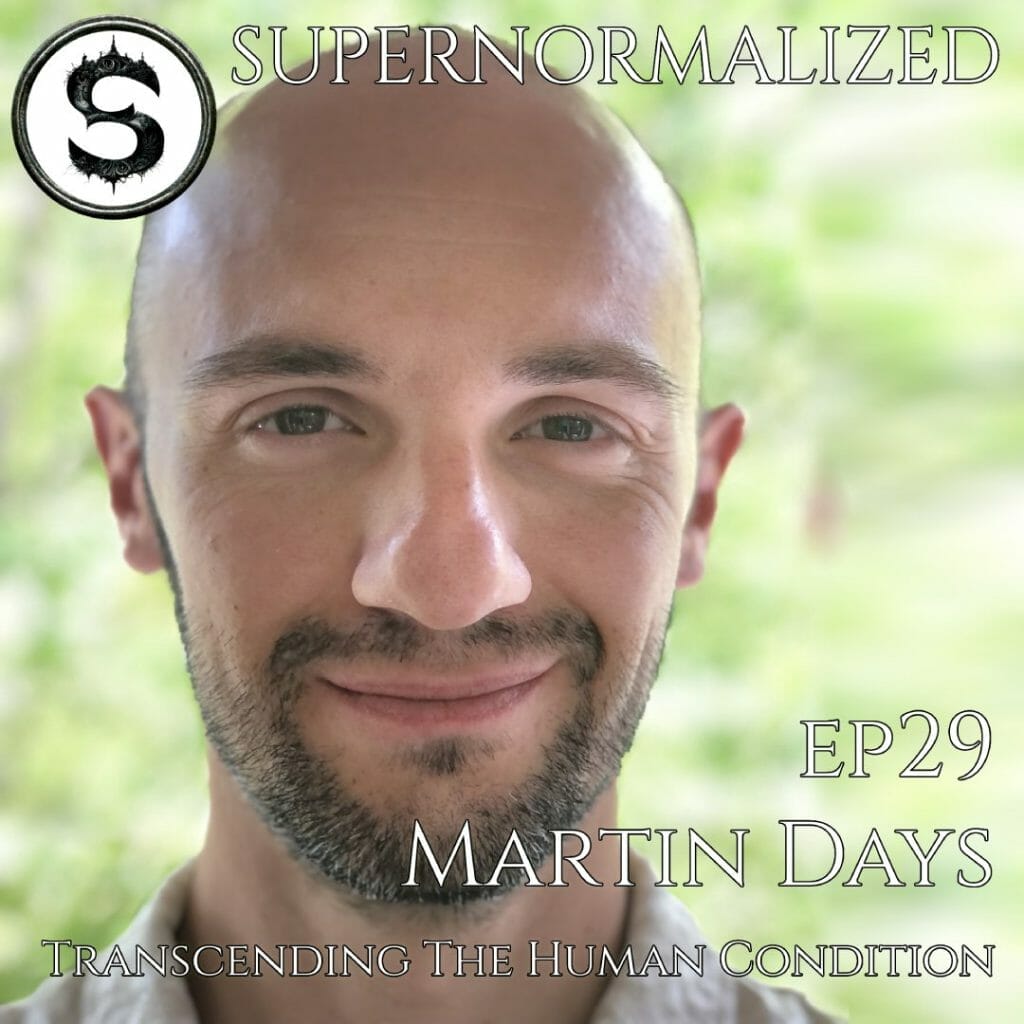


Welcome, dear listeners, to another episode of our enlightening podcast series. Today, we delve into the profound world of Martin Days, a man who has dedicated his life to understanding and transcending the human condition.
Martin Days is not just an author; he is a thinker, a philosopher, a guide who navigates the labyrinth of human existence with an unwavering curiosity and a deep sense of empathy. His work is centered around the exploration of the human condition – that complex blend of joy and sorrow, triumph and defeat that defines our existence.
Martin believes that we are more than just physical beings confined to the boundaries of our flesh and bones. He sees us as vessels of infinity, capable of transcending our human limitations. This isn’t just a fanciful notion or a poetic metaphor; it’s an idea rooted in the concept of prana – the life force that permeates all living things.
In his ‘Prana and I’ newsletter, Days delves into this fascinating concept. He explores how prana is not just an abstract idea but something veritably observable. It’s an energy that flows through us, connecting us to the universe and each other in ways we are only beginning to understand.
Martins’ exploration doesn’t stop at prana. He delves into various tools available for alleviating the burdens of the human condition. From meditation – that ancient practice of quieting the mind and finding inner peace – to interacting with nature – immersing oneself in its beauty and serenity as a way to heal and rejuvenate.
And then there’s psychedelics – substances that have been used by humans for millennia to explore consciousness and gain insights into the nature of reality. Martin approaches this topic with caution and respect, acknowledging both their potential benefits and risks.
Through his writings, Martin Days invites us on a journey beyond our everyday experiences. He encourages us to look within ourselves, to question our assumptions about reality, and to seek out new ways of understanding our place in the universe.
So sit back, relax, open your mind, and prepare yourself for an enlightening conversation with Martin Days on transcending the human condition.
If you are enjoying this audio journey with me and would like to support Supernormalized, I kindly ask for your assistance in reaching more curious minds like yours. I personally invite you, dear listener, to open your podcast app right now and give us a 5-star rating. By doing so, you will help us gain visibility and let the algorithms know that our conversations are worth sharing. Feel free to share your love for the show with the world and let your friends know how much you enjoy Supernormalized. Thank you for your support!
You can find Martin’s written work on his substack and if you subscribe to his substack you’ll get notified when he releases his Dao book soon.
https://consciousprana.substack.com/
Transcript
(00:00)
The thing I'm on about is the intersection between the direct experience as a consequence of the expansion of consciousness and psychedelics. Welcome to Supernormalized, the podcast where we challenge the conventional, break boundaries, and normalize the supernatural. Join me, C.J., as we explore uncharted realms of existence and unravel the mysteries of our universe. If you have an unusual knowledge or a unique story to share, reach out to me at supernormalized@proton.me. Let's make the supernatural the new normal. Welcome, dear listeners, to another episode of Enlightening Podcast Series. Today we delve into the profound world of Martin Days. Martin contacted me via Proton Mail, which is that address that I just mentioned previously, and said that he'd like to be on the podcast and send me his substack. Today we delve into the profound world of Martin Days, a man who is dedicated his life to understanding and transcending the human condition. Martin is not just an author; he's a thinker, a philosopher, and a guide who navigates the labyrinth of human existence with unwavering curiosity and a deep sense of empathy. His work is centered around the exploration of the human condition, that complex blend of joy and sorrow, triumph and defeat that defines our existence. Martin believes that we are more than just physical beings confined to the boundaries of our flesh and bones. He sees us as vessels of infinity, capable of transcending our limited human limitations. This isn't just a fanciful notion or a poetic metaphor; it's an idea rooted in the concept of prana, the life force that permeates all living things. In his prana and I newsletter, Days delves into the fascinating concept. He explores how prana is not just an abstract idea, but something veritably observable. It's an energy that flows through us, connecting us to the universe and each other in ways that we are only beginning to understand. Martin's exploration doesn't stop at prana. He delves into various tools available for alleviating the burdens of the human condition, from meditation, that ancient practice of quieting the mind and finding inner peace, to interacting with nature, immersing oneself in its beauty and serenity as a way to heal and rejuvenate. And then he touches on psychedelics.
(03:00)
Substances that have been used by humans millennia to explore consciousness and gain insights into the nature of reality. Martin approaches this topic with caution and respect, acknowledging both the potential benefits and risks. Through his writings, Martin invites us on a journey beyond our everyday experiences. He encourages us to look within ourselves, to question our assumptions about reality, and to seek out new ways of understanding our place in the universe. So sit back, relax, open your mind, prepare yourself for an enlightening conversation with Martin on transcending the human condition. Before we begin, however, I'd like to express my appreciation. If you are enjoying this audio journey with me each week, I would like to support Supernormalized. I kindly ask for your assistance in reaching more curious minds, just like yours. I personally invite you, dear listener, to open your podcast app right now and give us a five star rating. By doing so, you will help us gain visibility and let the algorithm know that our conversations are worth sharing. Feel free to share your love for the show with the world and let your friends know how much you enjoy Supernormalized. Thank you for support. Welcome to Supernormalized, Martin. So Martin, you contacted me directly, saying that you wanted to be on the show to share your ideas, and I went over your website and had a look and read some of your information. I thought, okay, this guy's got something to say. So I thought, maybe we should start with your story about how you got to where you are today. I mean, what prompted you to want to reach out? I mean, you want to share your story of your understanding of consciousness and how that mixes with your understanding of psychedelics, as as I understand it. So tell us your your your origin story and all of this. Yeah, sure, definitely. Thank you, first of all, thank you for responding to my request. I came across your podcast and listened to many episodes, and I thought this will be a perfect platform to speak my mind and share some of the experiences and insights that I have accumulated through the course of my life. Yeah, great. Okay, okay. So, um, where, how did this all start for you? I mean, obviously you you you've had a a life of a certain sort of path up to a point, and then there was changes that happened. When did these things all start changing for you, and then your understanding was expanding? What was happening there? Yeah. Um. Well, it's it's very interesting that many of the realizations that I've had occurred occurred do not occur in a specific point in time. I I've gone back in time and saw things that have happened to me that have contributed to an insight or my consciousness.
(06:00)
Expanding a bit, so I had a lot of fun just building a catalog of these experiences, so that I can say, oh, this is what brought me to this realization. This is why this is the answer to why my attitude is towards this phenomena or that phenomena. So where does it begin? I think my my first the first time I really began to to ponder my existence was when I moved from Macedonia to the United States. I was I just finished my first year of high school and I went into this new country where I didn't know anyone, and I spent two months of the summer just all by myself and with my brother watching TV and just thinking. And during this period, I I had some flashbacks from from middle school that were that were instructive as to the fact that we can go back in time and visualize events that have built, shaped, or misshaped our personality. And this is where I saw myself best during a my literature professor along with a bunch of other children. And I thought I felt rather than thought I felt. Oh my God, this was horrible. I regret doing this. And and this was on a very fundamental level. I felt sorrow, I felt regret, and and I was compelled to make amends with my teacher to one day meet her and and say, listen, I'm I'm really sorry, you know. And and this was one of these experiences. I also another one was remembering myself in in first grade trying to separate two children from from fighting, and and this led to me being beaten by by one of the kids that I tried to. I dropped you. I I wanted to be a peacemaker, and I I guess I've always had it in me to to make peace between people. And and and you know, at at 14 or 15 years old, realizing this, I was like, hmm, it's very interesting that there are so many nuggets in our past that we can unwrap and and behold ourselves and and try to make something with it. Yes. Um, yeah. So so life has been. I mean, of course, life is a process which is filled with experiences.
(09:00)
And and we're either oblivious to these or we aren't, and and it's a it's it's a very you know safe path to take for everyone to to start unraveling things from the past in order to make a better future and and make expand our consciousness mainly. Okay, so when you explain that it's like going back into the past, and that's sounds like it's a mind journey that you're going on to retrace situations and experiences. And I've done a bit of hypnotherapy with people in the past because I'm a trained hypnotherapist myself, and a part of that is timeline therapy, so I can actually take people back through the past into events. Is it something like that that you're explaining there? Hmm. Yeah. Yes. Okay. Great. Okay. Yeah, because I I believe that that and it's everything is ingrained in in in our memory and that you know the the layer of the onion we can peel and peel and peel and and reach many levels. Yes. Many planes of our personality and our life experience. Hmm. So we just say your memory is what built you, and it's good to go back and recapitulate over the the knots in those experiences to release you from them. Um. Yes. Yes. This is definitely the the case because I I believe that um I mean not just from my own experience but but throughout history and many people in this very moment somewhere on Earth are experiencing a trip down memory lane. And you know not just reminiscing, but I mean like pulling out things to to understand. Yeah. Yeah. And and we're we're we're equipped with this ability, you know, nature and the universe, and that which we are enables us to to do this. Hmm. Okay. So um yeah I I said the word recapit recapitulation before because it's something that Carlos Castaneda wrote in his books when it comes to going back over your past and clearing up anything that's holding you back from stepping forwards into the future, and it's a really good method of actually clearing things out of the way, and it sounds like you're doing something like that with the work that you've been doing with yourself, and over time it lifts restrictions from you and allows you to step out of the monkey mind into a state of in between, and when you're in the in between, that's where other things in the universe can start talking to you. Um. And in my experience, that's what happened to me. Is that what happened to you? Oh yes.
(12:00)
Absolutely, CeeJay. You know, who is it? Is it the universe that that wants us to embark on this journey? Is it us? Is it the ego? I don't think it's is the ego. It is something that that compels us. That past experiences that have shaped or misshaped us, and we're not a finite piece of work. You know, we we continue to evolve. These are the veils that that separate mind from consciousness, and and I've learned to distinguish between the two. You know, there is the brain, and some people still think that we're thinking with the brain, but the brain is the hardware, is the processor. Then there is the mind, and then there is consciousness. And um, and it's um, it is essential for anyone who who wants to embark on this spiritual path, on the path of awakening, to um, to perform, to entertain this exercise. Because the the fewer veils there are, the more we push them aside and dissolve them, the closer we are to the immediate experience. Yes, yes, and because these are in the past. Excuse me, these are in the past, and and we have to resolve the past and absolve the past, so that we can deal with the present. Yeah, or with the future. I I've had some curious experiences with that myself. In that, I I did get stuck on things that had happened in the past, in my perspective of those things, and I did go back to visiting with those people that I had experiences with, which I I saw as negative, and I outlined, I I literally went and and caught up with them and said it's happening this way, and I feel really bad about it, and I just wanted to say I'm really sorry, and they'd I'd pull me aside and say no, that's that's definitely not what I experienced, but thanks for saying sorry. It's it's curious. Sometimes our interpretation of things aren't always clear, and it's highly highly subjective. Yeah, yeah, well, that's right. It's very highly subjective. So it's um, it's interesting that that can happen. So obviously, with this, you discovered some techniques for yourself that actually worked really well when it came to this time traveling technique. Um, did what worked for you? I mean, how did you do that for yourself? I I simply allowed my mind to to just plunge into this undefined space, uh, which has depth and breadth and and.
(15:00)
I I don't do that anymore because I don't feel compelled. Yes. But but for the duration of time while engaging with this exercise, I think you you simply need to to wish to understand and to see some things that that have happened in the past and and it's very curious that that sometimes that that these events don't have to be you know life shuddering experiences or something horrendous or something blissful but there are very tiny insights that are revelatory of our qualities. For example, I I discovered. I mean, I I I saw myself riding in the bus, sitting next to my mother, and meeting the eyes of a woman, we sitting next to a man and a child, and and this was in the early nineties in Skopje, in Macedonia, this you know post-socialist city, and and and these people were foreign. They were probably from the Middle East, and the woman looked at me with kind eyes, and I responded, and and I felt compassion by revisiting this moment. I felt compassion because I had felt compassion for some reason for for these people. I vividly remember the faces, and and I remember the way I felt. So just just to to double down that that that we can discover a lot, and and it may be a very chance encounter with something that that may reveal that oh we are compassionate human beings, or we have a side to us that abrupt or or maybe even violent, you know, because we represent a totality of experiences, not just from our life life experience, but from we we bear a comic you know baggage from our ancestors too. Yes. Yes. Okay, so you're stepping back in time and recovering valuable energy from experiences that you've been through that helped you form who you are. In this, so yes, and where do you go from there? Um, where where I went from there, um, it's um this helped to build the puzzle of my personality, or rather to understand the puzzle.
(18:00)
Of my personality, and but the main takeaway is that is that I was able to to to kind of like rebuild this puzzle in front of me, and then look at it and disengage this thinking apparatus with the personality. So I guess I was, you know, these are Buddhist precepts that I came to discover later in life, which are instructive of you know that again that immediate direct experience with the absolute, and and the pathway to this realization or similar realizations because there can be many are experiences, you know, by by allowing ourselves to be surprised or to experience danger a little bit by climbing a mountain all on our own or visiting the desert or whatnot, you know, not doing it foolishly but prepared and of course you know for the sake of the experience and exploring our own response to that experience, you know, we build an arsenal of experiences that all nudge us towards a better station in life, and it becomes to me became apparent that having being in a good station in life is not necessarily dependent on how much money you make or your career. It's you know in this plurality infinitesimal plurality that is humanity. Not everybody can make a million dollars or a billion dollars, even though everybody seems to be striving for that, you know, to secure that that this in life. But yes, I realized that that you know we're we're highly complex beings that strive towards a simplicity of sorts, and this is where Taoism fits in perfectly. The the Tao Te King, which I discovered in my second year in in university, well during the the course I didn't touch the book because I was busy with doing other things like partying and and just listening to music and and everything in between. But after the course, I was I began.
(21:00)
To read the Tao and and every chapter was you know revealed something. It was a felt experience that that we are able to to embrace to have by by by reading by encountering the intention of the author of of of a text of a book, you know. And it's not just the Tao that came. It's it's also I would like to you know one of these experiences was I I was in a relationship and and I was perplexed. I was I was like, why wouldn't this girl return my calls? We were having such a nice time, enjoying ourselves, and and why why you know it's it's basically like teenagers trying to figure things out. But but I was perplexed. I was weighed down by by by I was ruminating, you know, and I was reading Siddhartha, and near the end of the book, Siddhartha explains he makes a parable with the river, the way the river is flowing, but it's but always stays the same. And I was sitting cross-legged on the couch in my living room, and I felt bizarre at the moment. I felt as if my my soul is is becoming separated from from the body. I felt extremely light, and I was observing this this moment for I was observing this for a few moments, and I I thought, oh my dear, this is this is something, and I learned through this experience about attachment and detachment, and and and you know from previous experiences, I've had an idea that attaching ourselves, you know, too vigorously to to anything can be detrimental to our path towards awakening. But but yeah, this is only this was only intellectualizing this wisdom to actually experience it is is something else, and and this is where I also learned how to differentiate between the intellectualization of of of wisdoms of wisdom and and and cultural memes from spiritual memes from actually having the experience, which I I I believe it is is highly important for anybody who is embarking on a spiritual path. So it sounds like you are going along on your path and reading all the right texts and and you discovered Siddhartha. Is that the human history?
(24:00)
It is a Herman Hesse novel. Yes, yeah, it's a brilliant, brilliant novel. I read that one, and yeah, very inspirational. And what would you say of of the understanding of the path, the path, the path of that path is there as well? Yes, yeah, yes, yes. It's it's beautiful that there are so many pearls that can be discovered in literature that that authors have left that are informative of of this of what we're discussing. The direct experience they can nudge us, they can inspire us, and and also, you know, really, I I learned how to be appreciative. And this is another facet of of the spiritual path to be appreciative, and I feel deep appreciation to you right now because we're having this discussion, and I it it gives me the opportunity to speak really for the first time, even though I've taken up writing to you know to make something out of this, you know, to help to to put a block in the blueprint of spiritual and psychic experience. But but but this is we're doing something. Yes, for for all the right reasons. Look, I understand that you're going through with that. I when I was about 22, I was going through some real extreme experiences and blissful states and phenomena, and I wrote a small book called "Some Times I Look in a Mirror" and I allowed myself to be surprised. And only it was only an eight-page book. I got it on Amazon. People are actually interested. It's it's it's a very short book, and it's all very simple sort of words about pointing out this path, you know. But that it I I also gave away 500 copies of it, and not many people got it at the time, but it's still good to get it out there. And one of the things that I was doing at the time, as a part of this, I actually had this this being that I was working with turn up to to instruct me and work with me, and I was so desperate to have other people understand this path. I said, "What do I do to make things happen? What do I do to get everyone understanding this? I want to raise everyone up in this consciousness." And she had said to me directly, "Don't do anything. Your energy is enough. Just do it. You experience yourself, and other people around you will just raise up. That's what happens." So I think that yeah, it's good that we're talking about it, but you're still actually doing the work even by just doing that experience yourself. Oh yeah, absolutely, and and it's it's great that that you you wrote, even though it's it is an eight-page book, it it is it is a work. It is indeed that that you know some.
(27:00)
Some of the people who read it will get something out of it. Yeah, that's right. Perhaps not everybody, but but even if one person gets it, yeah, it's it's it's a win for humanity. Yes, I have to write. And and I um and I I agree that that nothing is lost um and and the lesson that I took one of the lessons that I took from um from Lord to from from the da from the Dalai the King um is that um you know he he postulates that there is a uh a net a network that envelops the planet and that nothing ever escapes so that all the thoughts that we're leaving we're actually imprinting in this cosmic consciousness or maybe we can we should go that far maybe our planetary consciousness um so there is a process there's a process that that we um we're beginning to to unravel more and more to discover yeah right and it's it's super exciting it's super exciting yeah well it's exciting that you want to share it I'm glad you are sharing it you know I'm glad you're on the show talking about it now so you've you've hit this space um and well I shouldn't say hit because it's not right we're just more like dissolved into it into like that into the immaterial and as a part of being in that space you kept on exploring more and more of yourself and understanding more and more of yourself over time and you you said you were using psychedelics as well is that right um yes yes I I've had a few experiences with with psychedelics but let's just say enough so as to be um content with what I got from it yes um so I haven't had a dozen trips on on acid or psilocybin but those few were worthy enough um for me to to still really process yes the experience um you got a big value out of it then yes yes it stays with us and and not only psychedelic experiences but but any experience shouldn't be thrown away because uh we can we can drink uh the last drop of it to to make something of it um but before I I mentioned the the the psychedelic path that that intersection between consciousness and psychedelics um I want to share another experience um this is from my my last year of high school and I was living in New Jersey while I was in the
(30:00)
U.S. and and I decided that I want to I don't want to wear glasses anymore, which I've worn since probably fourth or my fifth grade. So I went and got a pair of contacts and and and playing basketball or just you know just just being myself a lot of times. One of them will fall on the ground, and I'll pick it up. I'll I'll do something to clean it up, and I had to clean them and take them take them off and put them on before going to sleep and and after waking. So I this led to an eye infection. Eventually, and and my my senior picture is with my eyes looking really weird and they were red and people were probably thinking that I was coming high to to school, which I wasn't ever. But but I was ignoring this this condition until it really disrupted my vision, and it it it I I spent probably three or four days in a dark room in my living room. Being very highly disturbed by by the faintest light, and I had to put ointment, you know, a number of times during my waking time. And but from this experience, I I learned how to listen to music. Being deprived of my of my vision for for that duration of time, I had a number of CDs that I played, and these were my father's, and and one of them one of the CDs was being played the division bell, and and this is where I learned I really really learned how to listen to music, not with my ears but with my mind and with with with the entirety of the the apparatus of senses. And and there I felt I felt something. Again, it was something that oh my god, music is is wow. You know, I just didn't have words to to how how it came across. You know, I felt the vibrations, I felt the emotion in it, and it was beautiful. And I got into music heavily after this experience. And the psychedelic experience, psychedelic.
(33:00)
Experient in in my case is um is highly related to to music um because it it simply makes uh the it it made the the music sound uh more vibrant more alive and I was listening to a particular style of music called psychedelic trance and this is where I I tried about LSD for the first time um and I would immerse myself in in the music um by simply smoking a little bit of cannabis you know and and I didn't do um LSD or any of the drugs that were um you know that that that fits that plane um and it took me probably six or seven years um to finally try LSD and I I had a few experiences and and I mean I don't know where to where to begin it was uh you know highly subjective and there were you know I guess I will be repeating some of the cliches that I'm certain people have shared with the world or with the psychedelic community per se but everything is moving nothing is um is is firmly set into in in space everything is moving and not only physical objects but but the the air and the plants and and and our hands of course and of course the the um most movement occurs behind closed eyelids I learned to do this um not on the first not on the second but on the third experience it was really the the experience that I guess I was looking for or that I needed and I was at a um I was at a music event and once the substance began to take a hold of my my mind and consciousness I simply nestled myself into this space and I submitted to the music and it was probably four or five hours of incessant uh procession of of of visuals and it's impossible to uh to to to describe to to catch a glimpse of these visuals but but it just goes on and on and on and and uh it is.
(36:00)
Geometric shapes and and sometimes and I I I'm certain that in this uh liminal space between uh being aware and being in a dream world there were eyes and pyramids and uh and I came out this experience um you know more dumbfounded about who we are and what we're on about our purpose in life uh the fate of the planet it was uh it was revelatory um that that we are uh so much more than than we thought that that that we are you know excuse me if I'm you know jumbling the the words English was not my first language but sometimes it is you know and um and and yes it's a very um LSD was an integral experience that um um that is is you know seeing it from from this uh distance in time um and and span of life and experience um it's it's actually really um it is a difficult complex nuanced experience and unfortunately I still haven't read Albert Hofmann's book LSD My Problem Child but but I have a sense what what he's on about that there should be education before embarking on a psychedelic experience and I mean this not only with in regards to LSD but also psilocybin mushrooms my first mushroom trip was I believe a year or two after my first my my third and and I will say final LSD experience um and and and the mushroom was um was different um it it it provided me with this warmth and and and and a sense of oneness with with the world with people with myself which I didn't feel I didn't experience while on LSD LSD was purely technical um you know it it it it rendered the mind in a sort of a technocratic uh machine that is intent on on creating on creating uh images which are not images but geometric shapes that are always in motion but um the the mushroom the other hand is is a lot more organic in in nature uh because it is organic yeah please.
(39:00)
Yeah, I wouldn't totally agree with you. I'm no spiritualist, so I had some experiences that did feel wholly organic, even though they were of that type. So I wouldn't say that personally, but it's interesting that you actually had those experiences. I'm not sure if that's been coloured by your own preconceived ideas, or maybe where you were at that time in your life. But in my own experience, it's not always been not always been like that. It has been like that at times, but other times, no, not at all. I'm having had contact with entities and extraterrestrials through through such through such things, and yeah, I mean, I've even had experiences so beautiful that when I come back to my body, I'm totally amazed that I'm actually human. So yeah, and that's that's you know yeah, it's yeah, I definitely I definitely agree. Yes, um, maybe maybe it sounded as if I I believe that that it is only that sort of experience. It definitely was definitely not, you know, it can be of course it has been for you, organic, but comparing between that and and Salasayan, it was very organic and and just a different ball game altogether. And I would say, meditative, it sends us towards this ocean of of meditation where we can easily slip into a state of of no mind and no thinking. And is another one of these wonders of of the world that it exists. It is there for us to to utilize in order to in order to to to you know to change something, to to see something new. I would agree with that. I would say also that it seems like that these these tools they're like a shortcut that enables you to see the no mind space and to be in the no mind space if you're receptive. Of course, I mean, not everyone will get that, and not everyone is going to be able to walk away with it, walk away from an experience and say, "Well, that was enlightening," you know, because not everyone has the same experience. Everyone's got their own version of of what's happening, what's going on, and what they need at the time seems to turn up. And yeah, so it's an interesting sort of space that they do evoke, and and it's no it's no surprise that you know they the Buddhist society in America at one stage.
(42:00)
Actually, had on one of their covers and talks about some articles in their Buddhist magazines about LSD and and Buddhism because there was there seemed to be a lot of people that were using that as a gateway to and and had discovered Buddhism by going through that path. So it's not surprising anyway at all that that actually is like that. So you know maybe it is a shortcut, you know, and but not all shortcuts work in the end. And some people, you know, you know, go on a go on a journey. It's like catching a plane. You take your baggage and you put it on the carousel, go for a flight, and then when you get home, you pick your baggage up again, and you know necessarily. So yes, yes, maybe you've been one of the lucky people in that case when it comes to be able to take away the the the positive points of consciousness by by journeying in this way, and that's a great thing. That's a good thing. Yes, J. It's interesting that what you said about the the Buddhists. They, I think that they have, you know, certain certain masters of of of the philosophy and of the practice, you know, the Buddhas throughout time. Yeah, I'm inclined to believe that some of them have had psychedelic experiences, which regained through deep meditation. Oh, absolutely, absolutely. Yeah, I don't doubt that. Yes, absolutely, and and not only in in Buddhism, but also in in Islam, and I believe in Christianity, because there are visual representations of of the transcendent space. Yes, in Islamic art, and and right here in one of the monasteries in Macedonia, I've discovered a fresco that depicts a field of electricity and sacred geometry in movement. In it, yes, yeah, no, it is. Yeah, totally agree with you, and and I like I like to put it this way: there's many paths up great mountain. Yes. Yeah. Yes, there are. Yeah, but it's to me it's fascinating that that as nature has intended to leave us with these artifacts being the psychedelics, which we have distilled into cultural signs, signs, so that people can can call on them to, you know, to to step over that boundary between between mind and and self, but as you said, also.
(45:00)
So this is um you know I'm I'm I I'm worried that the psychedelic experience is treated by many people as a magic carpet that we can simply take and you know take a flight and come back but but have we learned really learned and implemented something from that do things begin to repeat after so many psychedelic experiences and this is why this is why I felt compelled to to come out and talk about the intersection between consciousness and psychedelics about the intersection between the space of no mind the our ability to stop the mind from going I believe this not not only I believe but I know that it informs this psychedelic experience it enriches it to an extent that we can connect with a higher plane and this plane is a field of inquiry that we are yet to to begin to to discover because it is infinite and in this infinite space as I said before there is a language and there is intelligence there is a peculiar form of intelligence that wants to engage with us but it doesn't only want to engage with us as an ego it doesn't want to engage with the mind with who we are with what what we are career what we want to accomplish in life it wants to engage with our consciousness and you know in our exchange before the podcast I I mentioned that I am not sure if I'm ready to really go deep into this experience because because I I I think I have my finger on it but it it requires more time so that we can all together postulate some of the dogmas of of this of this experience which is not psychedelic per se and is not only conscious per se but it's a fusion of both and there is a third party in addition to our own consciousness and mind and the and and the the medium made with the mushroom or cannabis or or a glass of wine the third party in this in in the story is you know something that.
(48:00)
That baffles me. It's you know I I am repeating myself, but it is a language, it is an intelligence that is never the same. It just goes on and on and creates these you know essentially yes visualizations, but they occur in a space of no dimension. You know you can't see it from the third dimension. You are in the dimension together with this entity. And you know the closest thing that resembles this experience is visualization put on a song. You know the the fractal, the thing that that always changes, and it and and this form of art has gotten better. I have seen some amazing you know never ending visualizations that you know that that unravel new images. Um, but um, by observing this form of art and observing the um the intelligence, there is a fine difference because we are we can only view it with our eyes, but with the other thing, not only can we view it with our inner eye, but we can also be it. And what is it trying to do? I'm not sure. You know this is um starting to look like a field of um of I don't know just science fiction. I guess. Yeah. Is it is it the mind of of the universe? Is it um is it a a channel from a different civilization? You know is it us replicating our thoughts which are somehow being distilled into a visual representation? Um, I'm not sure. I'm not sure. I'm gonna pause at something. I got. How about this? You're you are an imagination receptor. So your imagination is like an antenna, and it captures information and then presents it to you. Yes, it can be the case. Yes. Within within whatever you're receptive to, you'll you'll be able to apprehend and then comprehend and then translate into something useful for you. So if if yeah, but but the scary the scary detail is that there is nothing to comprehend. This is the most disturbing facet of of that experience is that there is nothing to understand. Uh.
(51:00)
The only thing that one can do is simply observe, and and be in total shock. You know, you know it's it's dumbfounding. Yes, I've I've had visual experiences with, you know, psychedelics. I've had a few of those. Sure. But but those, you know, dazzling visual imprints of the psyche of things that we have encountered in life, they appear, and they look mesmerizing, and then they fade. Of course, we can latch the mind can latch onto such a representation, and and dig dig into it and try to understand it, try to commune with it. But it will eventually fade. Unlike this, the transcendent experience, it it doesn't communicate anything in particular. It doesn't have a mind. And and this is why, yes, it it doesn't have a mind in the sense that that we have a mind. Not my experience, okay. Okay. Yeah, please share your experience because, as I said, we're you know we're making sense of something that we cannot hold on to. I think it depends on how you receive it, how you're receptive to it. I mean, I'll give an example. So one time I was going through an experience where I was possessed, and I didn't believe it would be possible to be possessed, and I was possessed. And at that stage, I had two entities which were inside me and causing complete not a havoc, basically putting me in states of terror and causing events in reality around me to occur, which just ramped up all of the terror over and over again. It was very very annoying, and I knew what it was, and until that that moment that that happened, I didn't believe it was possible. And so I opened myself up even more to another consciousness and one popped in, and it was a another being which was helpful, and I was so glad for its help. And the being actually had it was a Mexican shaman who was obviously in between all time and walked me the way out of being possessed, and he did that through many practices that I followed that made at first no sense at all, but then made sense over time and cured me of the possession. Yeah, that that's absolutely absolutely fascinating. Do you think that this is an example of a parallel universe, the spirit world, which?
(54:00)
So brought to mind by by the shamans that you know in addition to the material world there is that with the entities and okay so in my experience the world is made of spirits and the illusion is that we are solid and living this experience without without seeing and once you pull your the the wool off your eyes and you see the spirits absolutely everywhere and you continuously constructing this reality then you'll get the gravity of what's actually happening that happened to me I actually had that happen to me where I had that happen where I had the you know the the the visual filters taken off and when it happened to me I was totally surprised and they were the spirits I was working with at the time were totally amused they were like now you get it all right so I couldn't go back from there so you know I'm right I I write that up one day as a story for people to read um yeah so I I know we're living in like as Terence McKenna says as in living in an ecology of souls we are in it all the time and the experiences we're having which we see as real are basically a fiction which is made by our imagination receptor which you know is seems to be the body um and it fits into a a form that we understand and can experience who knows why we're here experiencing that but um it seems to be meant to be just a good ride just enjoy it no absolutely yes um there is you know everybody is a living soul you know beyond beyond the body and yeah and these souls are um out and about doing their their own thing maybe yes having their own purpose yeah um but CJ I have a um a question um for you if you if you don't mind yeah sure um you know um there has been much advancement in how in the way psychedelics are regarded even by national governments and not just communities sure um you know with mushrooms being legalized in a number of countries um you know and I'm asking this question of myself too and I would like to get your take on it um do you think that governments are um opening up to um to the you know to the nature of the world that it isn't only matter and and and electrons and atoms but you know because from the from the perspective of of of the of the body politic this is a
(57:00)
No go zone, you know. How do we explain this? How do we reckon with this? What, what do you think about it? Hmm. Okay, so I, I think governments are a response to our decision to not be responsible for ourselves. So within that, we have government, and then government turns into everything that we see around us. So, is that a distraction? Probably is. Is it a is a dissection of ourselves from being pure, pure love, pure light, pure everything? Probably, and more than likely, what we're seeing over time as we become more accepting of ourselves and what we really are, is those barriers start to dissolve, and we'll see changes happening, not only in government but in people around us and in people's minds and understandings and acceptance of themselves. Yes. Okay. Yes, we're on the on the same page, and I believe that, um, people in this community share the same view because we're headed somewhere where we're shifting consciousness. Yes, it's seen. Yeah, it is unfolding, and, um, but we're yet to witness the repercussions of decades, if not you know centuries and millennia of, of all the baggage, that is weighing down upon, um, you know, society. Well, look, I think what we're doing is actually recovering a connection back to nature and natural ways of being, and that's inevitable. It happens that as we get to those sort of spaces, everything becomes magical because magic, you know, the world of magic, the magical experience of what we really are, and what reality really is, and, and, and what our soul really is, and and the beauty of our experi our experience of life, it has to be recovered. Otherwise, you know, the world doesn't go on the way it does. It just can't. We that's why it's changing. It has to change. Yeah. You know, in um, in um, I in the book Island, Aldo Huxley, yeah, um, was it he he imagines a, a system of government that, here's to enable a psychedelic experience to, to students, and I I if I remember correct, right, um, the the roundabout age, uh, where, the students, of the in the school, uh, need to, experience this is uh 16, you know, right on the cusp of adulthood. Right. Right. I wonder if we'll ever, uh, get to see such a radical, unquote, shift in consciousness in the powers that be. Hmm. No, I don't know. All I know is that things are definitely changing, and we will see great change within the next ten years.
(1:00:00)
Sure. It seems like we are going through a great revealing of all the things at the same time, and there is going to be some ugly parts as as we go along with that as well. But that's what happens when there is a birth experience of a new consciousness, a new understanding of self, and a new understanding of everything. Yeah. Okay, Martin. So, what I usually ask at the end of the podcast is, first of all, we are going through such intense times. Is there any anything that you'd recommend for people as a path and a means to help them get through these times? Yes. Our experience through the millennia has left us with tools that can help us overcome these difficult times. And some of these tools are free, they're immediate, and they're mundane, such as laughter in the sense of learning how to laugh at yourself. Yeah. Self-deprecation helps a bit, so that we can inspire some humor, some some self-reflective humor. Yeah. But laughing at the cosmic joke is, I believe, is essential to getting a grip on on this form of of reality. Meditation is one of the tools in the modern day human toolkit that that we can we can use. It is at our disposal at any time of day. We can meditate while walking. We can meditate while on the job. I mean, during breaks, let's say, yeah, depending the level of work that one is doing. Yeah, you can't imagine somebody, you know, driving a forklift and in the transcendence state. But definitely, meditation is is wondrous. Meditation enables us to to go within and to to clear our our thoughts. Okay, Martin. So thank you so much for coming on the show. I really appreciate your time. Now, how do people find you and your writing and getting contact with you? Um, I I started a Substack. The handle is consciousprana. Dot substack. Dot com, and this is where I am going to share my writings. And I am excited to announce: soon I will be publishing my own take on the Dalai King. Wow, cool. Okay. Simply, it will be.
(1:03:00)
Rendered not through some of the archaic language and and ideas, but I will try to bridge it closer to our time and and our circumstance. Yeah, so so in the present, my substack is the only outlet that I have, and okay, so I'll provide the the link to your substack in the show notes, and that would be nice. Yeah, and then I'd yeah I'd say people, if you're interested in knowing more, subscribe to Martin's substack, and then that way you can also catch up with his book when he when he releases it. Yes, thank you, C.J. Yeah, putting the word out there. Yeah, yeah. Well, thank you so much for your time, Martin. It's been it's been a pleasure talking to you, and yeah, yeah. I look forward to seeing your book come out, and yeah, we can talk more in the future. Most definitely, C.J. I wish you all the best. Yeah, same to you, Martin. Thank you very much, and and bye for now. Thank you. Bye bye. Well, thank you very much, Martin. That was quite a show. I didn't expect it to go the way that it went, and it was interesting. In that we both got in on angles, our bites and understandings of how reality is and the experience of reality and the benefits of transcendence. I hope you enjoyed the show, and if you have an unusual experience or healing modality or life view or anything supernatural that you'd like to share, please come on the show. Contact me at Supernormalized at proton. Me, and I will look forward to speaking with you soon. Now, it's the end of the show, and thank you so much for listening for this week. I look forward to you coming back and listening to me next week. Until then, bye for now.


