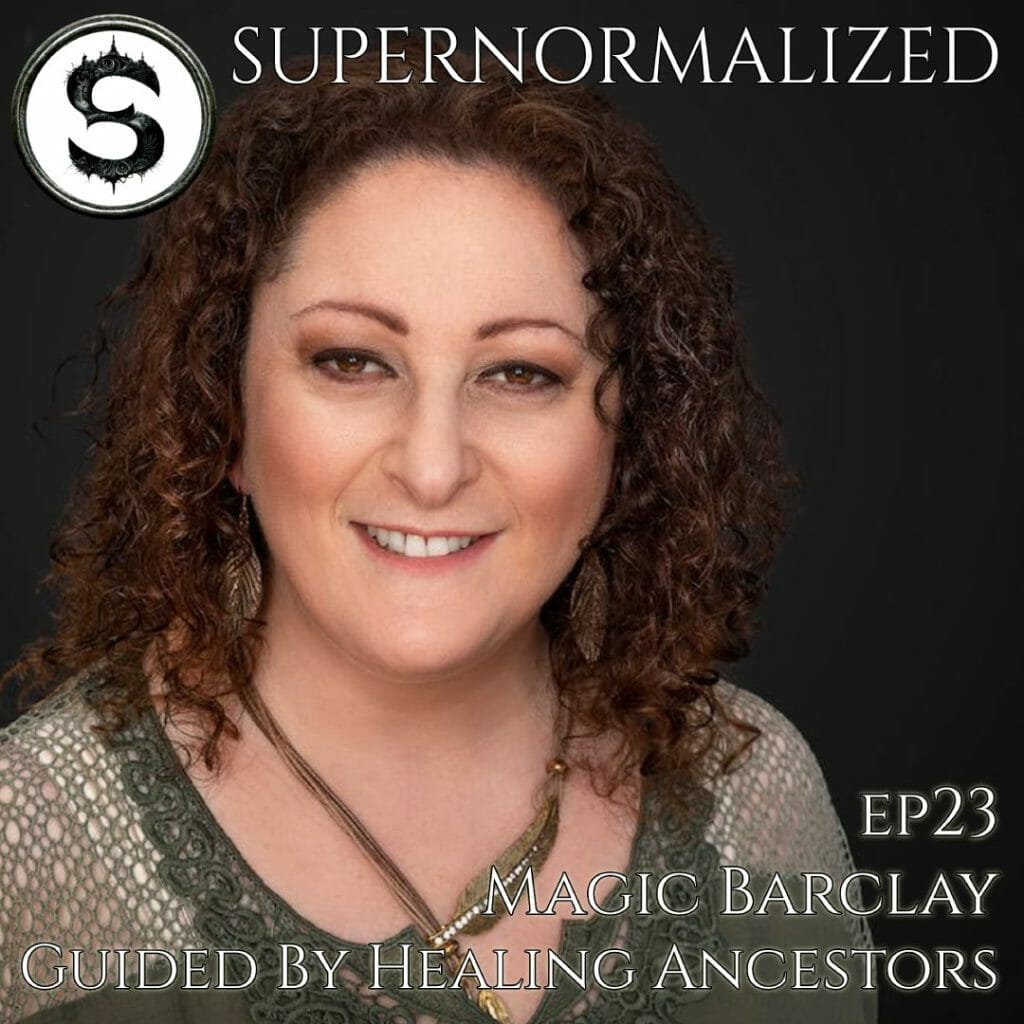


Magic Barclay’s story is one of resilience and transformation. Weathering a tumultuous childhood marked by emotionally neglectful parents, Magic found herself grappling with eating disorders and alcoholism at a young age. This period of strife was followed by an abusive marriage that only deepened her personal struggles. However, determined to break the cycle, she courageously left everything behind – embarking on a lengthy legal battle that would test her strength and resolve. Despite these hardships, including severe health conditions due to continuous stress and trauma, Magic found healing through self-education about the body’s systems and seeking help for her trauma. Guided by the spiritual presence of her deceased grandparents, she charted a new path towards wellness and self-love, transforming into an empowered woman who took control of her own health. Today, Magic Barclay is not just a survivor but a beacon of hope – as an instructor of PNEI of Trauma, the lead practitioner at Wholistic Natural Health Australia and a podcast host sharing her journey with the world.
Lastly, if you enjoy journeying with me, the best way to support Supernormalized is to help me reach more curious minds like yours. So, dear listener, I personally invite you to open up your podcast app right now and hit up that 5-star rating, and let the algorithms know that this is a conversation worth spreading so you can tell the world and your friends how much you love the show.
You can access Magic and her services via this link below:
She mentioned in the podcast this book as being pivotal in her self transformation and I thought to include it in case others are interested also:
https://drgabormate.com/book/when-the-body-says-no/
Transcript
(00:00)
You have to be open to it because it was a long time I wasn't, and I felt lost. And you know, looking back, there were moments that were there. Welcome to Supernormalized, the podcast where we challenge the conventional, break boundaries, and normalize the supernatural. Join me, CeeJay, as we explore untold realms of existence and unravel the mysteries of our universe. If you have an unusual knowledge or a unique story to share, reach out to me at supernormalized@proton.me. Let's make the supernatural the new normal. Today's guest on Supernormalized is Magic Barclay. Magic Barclay's story is one of resilience and transformation. Welcoming a tumultuous childhood marked by emotionally neglectful parents, Magic found herself grappling with eating disorders and alcoholism at a young age. This period of strife was followed by an abusive marriage that only deepened her personal struggles. However, determined to break the cycle, she courageously left everything behind, embarking on a lengthy legal battle that would test her strength and resolve. Despite these hardships, including severe health conditions due to continuous stress and trauma, Magic found healing through self-education about the body systems and seeking help for her trauma. Guided by the spiritual presence of her deceased grandparents, she charted a new path towards wellness and self-love, transforming into an empowered woman who took control of her own health. Today, Magic Barclay is not just a survivor but a beacon of hope. As a instructor of PNEI of trauma, the lead practitioner at Holistic Natural Health Australia, and a podcast host herself, sharing her journey with the world. Lastly, if you enjoy journeying with me, the best way to support Supernormalized is to help me reach more curious minds like yours. So, dear listener, I personally invite you to open up your podcast app right now and hit up the five-star rating and let the algorithm know that this story is a conversation worth spreading. So you can tell the world and your friends how much you love the show. Welcome to the show, Magic Barclay. Thanks for having me. It's great to be here. Yeah. So, where did you get the name Magic? I mean, that's quite a magical name. It was my grandfather, and I know we're going to talk about him a little bit later. But it's really been.
(03:00)
Themes through my life, and I actually wasn't born magic. I was born with several names, and I come from a Jewish background, so I can't be named after someone that's living. So I collected all these names from those that had passed. Yes. No. I was about eleven or twelve, and I went to my grandfather, and I was having some problems at school, and you know he was very much don't whinge about it, do something about it. Yes. So he turned around, he said, "I named you magic for a reason," and when you want what he goes, come on. So we went to birth, death, and marriages, and he actually changed my whole birth certificate. Wow, that's cool. And so he said, "Now don't come to me and whinge about things. I love you dearly, but sort it out." I do try to. Yeah, that's great. That's great. So could you start by telling us a bit about your childhood and your family dynamics? How did that shape who you are today? Yeah, look very difficult childhood. My parents got divorced when I was very young, and they spent most of my childhood fighting each other through courts and you know through society and community, and it was you know who could hurt who the most was kind of the game they were playing. Um, but I was lucky that on the sidelines I had my grandparents and my auntie, and you know they were very loving and nurturing, saw me for who I was, so you know I had the frostiness of home and the war zone, and then I would get these little reprises of family and nurturing, which I wished I had in my household. So you know it was quite difficult. It was the seventies going into the eighties, and you know divorce wasn't pretty common back then, so there was a lot of shunning from schoolmates because their parents were all together and you know mine were at war, literally sending the police to pick us up from school to take us to an ex's visit, and you know so it was a little bit difficult. But like I said, I had that safe haven on the side, so you know I look back now and think, well, if I hadn't had that, I would have been really stuffed. Yeah, right, right. So it sounds like you say you faced so many challenges growing up. How did these experiences make you feel like the black sheep of the family? I never really understood, and I'm saying understood rather than comprehend here, because I never understood that you should hurt someone to make yourself feel better. And I comprehend that hurt people, hurt people. It's a very different situation, but it just never felt right that you know you need to be a bad person to make yourself better. Like it doesn't work for me. So I was often on the fringe of my family, and my older brother was the golden child. Could do no.
(06:00)
And yet I could look sideways and get all that, you know. Oh. So I just thought I don't really belong here, and and that's okay. But I did have like said that that place of belonging, and that was with my grandparents and my auntie. Hmm. And so when I was there, I was no longer the black sheep. Yes. You know they saw me for who I was. No, like. Hmm. You wanna scream and shout and whatever that's fine. So I was a bit of a tomboy when I was growing up, and I'm the last child in my generation and the only girl. And I remember my grandfather, my maternal grandfather, played bowls, and then the bottom cupboard, the bottom of the stairs of their flat was his bowls uniform. It was always, you know, so pristine and white, and his hat was very well starched. And any of my cousins or my brother even looked at the cupboard, they'd get a hiding. I would come in, cover it in mud, open the cupboard, get his hat out, jump all over it, laugh, giggle, you know, whatever. And he'd go, "I darling, you really shouldn't do that." Oh. So I was the black sheep, literally the the sheep covered in mud. Um. So you know, I guess he nurtured my originality. Yeah. It sounds like. He also taught me there were consequences. I didn't get away with wrecking the bowls hat and the uniform. You know, I'd have to then take it to my nana and say I did this. I need to learn how to fix it because he was like, "If you're going to do something, there's consequences, but you deal with it. It's not someone else's problem." Hmm. The fact that you wrecked my bowls uniform is not my problem. That's your problem. So I then had to learn solutions. So you know, I had both of them teaching me that yeah, I was the black sheep right from day one. Yes. Yes. And it sounds like you had that polar experience in both sides of the family that formed informed you of how you had to behave in the world in different ways, and that would have been a bit challenging because you you actually felt in between and pulled to and fro with all that. Um. Yeah. Yeah. So can you share about um your struggle with um eating disorders that you experienced during your teenage years and how were they related to the lack of control in your life? Yeah, I had totally lost control pretty much from day one. So oh, you know, divorced parents and then problems at school, and then you know, my big brother deciding to go with my father, so I lost him, and I was stuck with my mother. And so I thought, well, you know, everything spiralling out of control. What can I do? And so the only thing I could do was control my eating, and food had become quite a punishment already over time. So, you know, my mother would would go on a Thursday and do swimming lessons after school with her best friend and and her best friend's daughters, and we get like chuckle chicken and chips, you know, on the way home, and my mother would make me sit there.
(09:00)
And what everyone ate, and you know they couldn't have seconds before I was allowed to have any, and I would get my hand smacked. So I kind of learned that food is punishment. And you know she would cook steak. I can't even really call it steak. She would cook cardboard, you know. So it was like you could bash it on the side of the table and and break the table with it, and really mushy veggies. And when I would complain, she would throw things at me, or she would say, "Eat it or don't eat it. I don't care. You know whatever. That's dinner. Deal with it." So I saw this pattern of food is punishment. So when everything was out of control, I thought, "Oh, okay, food. I can control this. Yeah, food or lack of." So I was punishing myself. Yeah. By controlling what I ate, and that just went right down the gut, leading to anorexia. And sure, I felt in control, but I also got down to forty two kilos, and you know I'm five foot three, so forty two is a little bit light. Yes. Yeah. Wow. That would have been very hard on your body, and also hard on your body growing up as well, because that kind of affects everything and like it causes you to spiral into all sorts of states, including depression. I've read about, and yeah, that that would have been hard. Yeah, was, and you know what? It wasn't the end of my punishment with food. So you know, later on, after I had my kids, I became a binger because again, things were spiraling out of control in my life. What do I do? Let's punish myself with food. Yeah, the opposite of that is overeating and yeah, eating comfort food all the time. Yeah, because I mean, well, you figure there's nothing to lose here, so exactly, exactly. I know I've been there. I remember that. I mean, you know, during the COVID years, it's like, well, we're on the toilet. I might as well eat anything I want. So yeah, yeah, I can understand that. That's been tough. Okay, so moving on to your early adulthood, can you talk about your struggle with alcoholism and how that again is another form of self-punishment that you adopted? Yeah. Yep. Definitely, it was really a lack of sense of self and just not having any control in my life. So not only was I becoming anorexic at that stage, but I had become an alcoholic by sixteen. And you know that pretty much only stopped the day I found out I was having my first son. I was like, "Oh, I'm pregnant. I better stop drinking," so I stopped cold turkey. But yeah, look, alcohol was a numbing sensation for me. I would drink till I was blacked out drunk, and you know when you're blacked out, nothing bothers you. So that was how I did that. Yeah, led me towards a whole lot of health problems.
(12:00)
But you know, it was also disconnecting from the pain, the things that caused the pain, and from the world in general. Wow. Yeah, right. Yeah, because you you needed to unplug to be able to actually reset every now and then, and that was your way of doing it. Yeah. Yeah. Yeah, the stress. Wow. And so, how did these personal difficulties affect your relationships with others, say your child, your children, your partner, and maybe other family members? And could you tell us more about that phase of your life and how that rolled out? Yeah. Once I, as I said, once I got pregnant, everything stopped. So I started eating properly and I started being sober. Um, because I had another life depending on me, so that was, I guess, the big turnaround for me. Having said that, it wasn't the end of my eating issues. Like said, I was binge eating and you know that kind of thing. But how did it affect my relationships? Well, I didn't have a relationship with my then husband. Um, never really liked him particularly much either. I only got married to have children, and you know something in my brain, very old-fashioned, said, "Well, if you're going to have a baby, you better be married, girl." So I, yeah, right. Yeah. Um, I thought I liked him. I thought I loved him, but look, neither of us should ever have been in a relationship with each other. It was just not a not a good thing for either of us. Um. So yeah, you know, I did struggle to have relationships with people, and you know, I look back at my childhood. Well, all of that teaching was there. Was, you know, I never knew you could actually be married and be happy, or even like each other because my parents didn't. So I just repeated history, you know. Um, I really struggled to keep friendships because I didn't see any worth in myself. Um, I guess the only relationship I ever really knocked out of the park is being a mother. Yes. And you know, I still live with my two sons, the young adults now, and we're best friends. So you know, I'm really lucky that I finally worked that relationship, and yeah, I had these two little souls helping me do that. Mm. Right. Right. So obviously, you um got to a certain point in the stress in that relationship itself with your um husband and um all of the the trauma around that, which is probably related back to your experience of your, you know, your your parents' experience. When that hit hit its head and and and came to a head, and um, you decided to change all that and leave. How how did
(15:00)
That all roll out for you. There, I mean, what what what experiences did you have, and how did it feel for you to leave all of that behind? Well, that was a really difficult time. So, you know, I'm not putting all the blame on him. Right, I certainly wasn't the best person I could be at the time, and I was very reactive. And in some times, I provoked the trouble. Right, so I'll I'll take my piece in that, but um, yeah, it was a very nasty breakup. It was very violent marriage at the end, and uh, you know, we went through several court systems, and the divorce was dragged out again. History repeating itself because that happened to my parents, and yeah, was not very nice. And unfortunately, you know, the upshot of the whole situation is ten years later, my children don't know their father, and that's something they've chosen to do. Um, you know, right through all the court proceedings, and and even after that, and my youngest has just turned 21 six months ago. You know, even on his 21st, just said, "Look, no matter what he's done, he's still your dad. If you want to contact him, go right ahead." The answer's always been the same since the moment we left from my kids, and that's been we don't want anything to do with him. Stop saying it. So, you know, that's totally their choice. Um, but yeah, they saw what was going on, and uh, you know, I've apologized to them for my part in the situation, and they've gone, "Look, you were doing what you had to do, and you got us to safety, and we didn't particularly like being there." So, you know, move on, mum. Yeah, yeah, it happened as it happened. Yeah, yeah, I'm sure one day they'll probably find a point of connection with him, as we all do as we all get older and work through these things themselves. Yeah, and you know what? That's totally up to them, and I actually feel sorry for my ex because, you know, not to sound like the the over overly proud mother, but I am. They're wonderful human beings, nears nothing to do with them, and he doesn't know how amazing now. So, you know, that's his loss, basically. Hmm. Uh. Okay, so you spoke about adverse experiences leading to severe health conditions, and um, what effect did that happen? How did that actually happen to you, and and then how did that affect your life? Okay, so we left my ex, and we changed towns to get away from him, and I wasn't well, and I hadn't been well for quite a few years. I'd been going to the doctors. Something's wrong. Something's wrong. First, I told me I had mental illness, and then they told me, you know, I'm making it all up, and then they told me I'm attention-seeking, and my blood testifies so nothing's wrong. I went to see a GP in Newtown, and I said something is wrong. I don't know what it is. I think.
(18:00)
It's my thyroid, but I don't know. So you know, he did some tests, and of course, all blood tests came back okay. And then he did an ultrasound, and he goes, "There's something there, and I need you to see an endocrinologist." So did, and then she referred me to a general surgeon. And before I knew it, they were saying, "You've got cancer, and it's stage four because it's in your lymph nodes now, and it's been there quite a while." So what are you doing next week? We need you to have surgery. So you know that was like, what? What happened? Yeah. Wow. Yeah. And so I realized that you know whilst I was battling through the early phase of the divorce, I was sick. Yeah. And so you know, in the final phase of the divorce, and then the years afterwards of court proceedings that followed, I was fighting for my life as well as fighting for any assets. And unfortunately, my life was more important—not unfortunately, but it was more important. So I lost out everything else in court. I got the kids, and I got what was left of my life, and I got legal debt, and it was pretty much it. Missed the house, missed the car, missed the money, but you know here I was, and I had a second chance at living. So you know, take it as you will. I walked away pretty okay. Some assets would have been nice, but life is probably more important. Yeah, definitely more important. You after that, you would have actually started looking into your own health in different ways, and you decided to study the body's systems. What drove that interest and dedication to self-improvement? I mean, obviously, it was the cancer itself and all the stress and trauma you'd been through. But was there anything else that actually pushed that along? Yeah, look, it was the medical gaslighting of years and years of medical gaslighting, and you know all of take this pill and you'll be okay, but then it creates more side effects, and take this pill for those side effects. So really, once I had the cancer surgery, I only had it because of the divorce. I wanted to go natural completely, but I was told if I didn't have the surgery, I'd be deemed a bad parent. I could lose the kids in the divorce. Right. No kind of you know. I'm twisted behind my back. Had the surgery. Yeah. And then they said, "Oh, now we need to do chemotherapy and radiation." Oh. No. Get stuffed. I'm done. Like I'm pulling the pin. I'll deal with this myself. You said you've cut it out. I'll fix any thing else that you've left. And you know, even having said that, I had surgery. They botched that up. So. Oh God. You know, I'm left with just a cyst in my neck, hypoxia due to that, so an lymphedema. So you know, I'm still ten years later dealing with the aftermath of surgery.
(21:00)
Yeah. So throwing myself into natural health and integrative medicine and functional medicine seemed no-brainer at the time. It was like, well, you know, I gave allopathic medicine such a chance to fix this, and they kind of didn't, and they created more problems, and they kept blaming me for everything, and I'm just the body, like they're the ones that are supposed to know it all. So I think I'll learn myself what I can do, and so that's exactly what I did, and you know, now, like I said, ten years on, I'm still in remission. Um, I don't stick my head in the sand at all. I every year do complete tests and check all my markers, um, but I live a much more holistic and healthy life than I did prior to that without the the chemical side effects now. Yeah, right, right. That that story actually mirrors mine a little bit because I I um I was working in a really stressful situation as a programmer and eating really bad, and the stress of all that just blew out completely, and I had to quit my job because it was killing me to to be honest. And within about a year and a half later, after that, I was diagnosed with bowel cancer, and totally put me in shock. Was like, what am I going to do, etc. And I thought, well, I didn't know anything about the alternative methods to looking after that at the time myself. And I went along with the doctors, and so yeah, like yeah, well, we just we just do a biopsy and have a look, um, and they they did a scan on me and cut some out without asking me. They just did it anyway, and I went and saw my doctor for review, and he said, oh, we've cured your cancer, but you know, you still need to have radiotherapy. And I I just was in shock, was like, no, and that's not that's just not happening. And you know, just by chance, my friend's mother's partner piped up and said, "There's other ways," and pointed me in the other directions as well. So, yeah, that's my story too. In some ways, I found it really interesting that you actually could do it another way. You know, for myself, and it worked. And like you know what, that was uh, what twenty four years ago for me, but I'm not as good as you. I don't go do the checks. You know, like now in life, I don't care. Cancer's just a process, yes. Well, it is just a process. Collection of dead cells. If we look at it, that's it. That's it. From a medical standpoint, it's a collection of dead cells, and it's only when you do something to disrupt it that it's going to spread. That's it. I guess for me, you know, there's been a whole lot of charlatans out there going, "Oh, I cured my cancer." So for me, you know, I I want to know I've got those tests there, yes, and just go well, you know what, I am keeping an eye on it. Yeah. Who knows? That's right. That's right. Yeah, yeah, yeah.
(24:00)
It's good to not buy into the marketing team, which is pushing all of the methods that are popular. I mean, they do work for some people, but yeah, I don't know. I like my way. Me too. Okay, so despite facing medical negligence along the way, what kept pushing you forward on your journey towards a healthier self, physically and emotionally? Okay, well, this is where my grandparents come back, really. Excellent. So, come back. What do you mean? How did how did that play? Pretty much through my life, I felt like you know they were watching over me, and I would question them as to why is this happening. Yes. And you know my grandfather saying, "Called you magic for a reason. " Yeah. Live up to it. That was always in my head, and then you know I would remember times of my grandmother, my nana, saying, "Well, you know, eat this, rub this on that," and I would kind of get these inklings as to there's more information there that I was exposed to when I was little, but for some reason I don't remember it all. Right. So what do I do now? And you know when I hit my rock bottom in my marriage, and when I hit my rock bottom with the cancer, like, here's I hit rock bottom a few times. I gotta tell you, you know, there was that that kind of knowing that wasn't even a voice in my head. I can't even say that, but it was just a knowing that someone's got my back, and that I have access to all the information I need to get over this hurdle and to move on. And you know, certainly, post cancer, post divorce, and things, I was sitting in a rental, just going, "Well, you know, what do I do now? " Like I was still got two kids to look after and a whole bunch of pets. What do I do now? You know, there was this this push, I guess, from the other side of you need to reconnect, and you know you need to know that we're there to support you. We can't give you the answers, but we're here. We've got your back. And so finally, I felt you know that encompassing love, and I would look back at times when things weren't so good, and I remember you know one time in particular, my youngest son was just a baby in his cot, my elder son had just gone to the big boy's bed, you know, he was like just turned two, and all of a sudden he's on a big boy's bed, and I could hear him talking to someone. I'm like, who the heck is he talking to? It's like bedtime, and I was a really strict parent, like you know, seven o'clock, that's it, bed. Nothing else. Put your head on the pillow. I don't care if you look at the roof, but that's where you are. You know. Yeah. And so he was having this this babble chat with someone, and I'm like, what's going on? So, ignore it.
(27:00)
And then when he was four, he was doing the same thing. So I went in and I said, "Listen, who are you talking to?" I've been going on for a couple of years at night, not every night, but you know, who are you talking to? And he goes, "I'm talking to Papa." Now my kids had never met my grandparents. Oh. Because they passed, you know. Yeah. Decades before. So what do you mean you're talking to Papa? And he goes, "I'm talking to your Papa," and he's telling me about you. I went. That's so excellent. What's going on here? You know, and so I said, "Right, tell me about Papa." And and he'd never seen a photo of my Papa. Yes. Right. And we never really talked about him either. And he said, "Oh, he's making a clicking sound in his mouth." Now my Papa had dentures. Yes. And he used to annoy the heck out of everyone by sitting there with his tongue and clicking them on and off. Oh. And so you'd you'd hear the the dentures clicking on off. And so I said to my son, "What what's the clicking sound?" And he goes, "I'm playing with his teeth." I'm like, okay. And now my Papa used to love Tiger Balm. Oh yes. And he would drown himself in it, like even to this day. If I smell wintergreen oil, I'm like, oh my god, Papa's here. Like you know. Yeah, that's that's a signal. Yeah. And and he goes, he's got this funny smell and it's kind of burning my nose a bit. Oh. I went. What? So I had some Tiger Balm that I had not opened, but I just felt like I needed to have a tin in the bathroom just in case. Yeah. Even though I was quite adverse to it, and so I went and got it and I said, "Does it smell like this?" And my son goes, "That's it." Wow. And I'm like, oh my god, for like the past two years, you've been talking to my grandfather. What's going on? So you know, have little moments like that. Yes. And then I remember another time when my younger son was about two or three, and you know he said, "Oh, there's a cat here," and I went, "Well, I know there's a cat here. We own two cats, like we own us really, but you know, who who's the cat in your room?" And he said, "Oh, she's this big tabby and she's really fat and she adores you, but she's really grumpy with everyone else, and her name's Goldie." And I'm like, that cat died 20 years ago. Wow. What the heck? And he goes, "Mum, don't sit on the end of the bed. You'll squash it." Oh my god. So you know, I had moments like this where those that had passed that I was very attached to would pop back in, but through my children, they weren't coming to me. They were coming through both my kids, and you know, as years went on.
(30:00)
I would start getting messages. Yes. So I am now in our garden at home. We grow a lot of our own food, and so you know the smell of dill takes me back to my nan's kitchen of making pickled cucumbers with it. And I planted dill last year. Yes. And it took off, and it was great. We had a lot of dill. I was going through a bit of a tough time last week. You know, a lot of stuff happening. The car broke down. I got stuck in the middle of nowhere, and all this. Anyway, came back the next day and checked on my veggies. And the dill that I planted last year has now gone right through every part of my garden. So as I'm walking through the garden, all I'm smelling is dill, and it's like taking me back to snap out of it. Move on. There's something productive you can do. Yes. Yes. So you know my nan is there, and she's reminding me to reconnect, literally reconnect with the earth and reconnect with myself. That's brilliant. That's brilliant. I love that story with how how your children connect first. I mean, it's probably you probably actually were connecting to your grandparents. They would have been giving you nudges here and there, but if you weren't actually open to it at the time, probably the best way would have been to come through your children because they're already open. So for them, it would have been just natural for that to happen. Yeah, and I think that's really sad. As adults, we lose that connection. I'm a lot more connected now. Yes. Um, and certainly you know when I'm in my my REM sleep state, I'll get messages from those that I love that have passed. Um, but yeah, you know I think it's easier to come through the kids, and and we have to listen to that, and you know not say I know you never heard that or you never saw that because we've lost that connection. We can't put that on our kids. No, no, no. I mean, our society does have a bit of blindness when it comes to the spirit realm, but I mean, obviously that is changing every time, and it must be otherwise we wouldn't be talking today. So yeah, but that's a good thing. I think I think it's better if we integrate the spirit world back into normality because you know for all of us would have would it actually would help if we had say the the friendly grandparent or the helpful relative or some sort or great friend that's passed that could actually tap you on the shoulder and say don't go that path. Yeah. Or go that path. Yeah. You know, and and if we had that, then because I mean they're obviously seeing in five D reality, they can see the timeline. They can go, yeah, that's that's not going to work out and do it. So if we all had that, then obviously our lives would be a lot better, wouldn't they? Exactly. And look, we have two cats now. Yeah. And you know we've always had cats and dogs. At the moment, no dogs, but yeah. Um, you know I was saying to you off air, we've got an 18 month old kitten, and she.
(33:00)
She doesn't know a lot of the pets that have passed, but occasionally she would just like look up the wall at the roof and then go and do something, and that could be something that, you know, five cats ago did, and it's like, wow, you know, where'd that come from? And she's not particularly destructive, like she doesn't go out of her way to do things. But we had a cat several years ago, while I was going through my cancer journey, we had her, and she would just sit and do that cat thing. You know, you got a glass on the bench, she would look at you, give you the ultimatum of do something for me and stop me, knock the glass off. Well, our little one the other day, she'd never done this in eighteen months of her living, and she looked at me the other day, and you know, she looked at her bowl because it wasn't magically filling up with food again, and then she found a glass that was on the edge of the bench, and she doesn't meow, so she's half Siberian, so she only chirps, she can't meow. Right. And then all of a sudden she went over to the glass and she gave out this deep meow which our old cat Shimmer used to do. She had a very deep voice, and she would just give you this like very succinct short meow before she would knock things off. Anyway, so the little one gave this meow and then knocked the glass off, and then looked when it hit the floor completely shocked that any of that had happened. Like she was not in her own body when it happened. And I called my boys in and I said she just meowed. Now, like she can't, like she's a Siberian. They don't meow. They chirp. No, I swear she meowed and then knocked the glass off. And I'm like, um, come on, like she can't do that, and she's not destructive. So like, what do you want? And I thought no one believes me. Okay. Yeah. You just believe yourself. That's enough. I find. But I definitely felt Shimmer coming through our little one then, and you know that was just so out of character, and it was just like was in a moment where I was starting to doubt myself and getting myself all stressed up, and it was like, hey, now I'm going to snap you out of it. Here's a moment. Yeah. Excellent. Right. So when you're um you've been working with your your grants and then pushing you along a certain path towards would you say towards health and change? Yeah. Now you actually then discovered for yourself holistic natural health because of all this, um and you are now an instructor of PNI um of trauma and um what what led you to making that decision to become an instructor of that and how does that connect with?
(36:00)
All that's brought you here today. Yeah, so I was actually reading a book by Dr. Gabrielle Mate, and it's called When the Body Says No. Yeah. And you know that's a fabulous book. Highly recommended. And he talked about the PNI, and when I was reading about it, I'm like that explains a lot. And so I really delved into learning everything I could about it, and then writing my own course on it for other practitioners. Uh, and the reason I did that was what he describes about our thoughts and emotions and memories and feelings. So the P, the psycho, then flowing on to our nervous system, endocrine system, and then the immune system to keep us all safe. I looked back at my history, and you know I particularly remember my grandfather, who was an alchemist and a compounding pharmacist, saying, you know, when you're feeling this, whatever X, Y, Z, then you know sometimes it can feel like nerve pain as a result, and sometimes you might feel a little bit dizzy or shaky, and then you might get sick. So sometimes when you end up with a cold, you've got to work backwards and say, how did I end up with this cold? Did something else start it? And so I remembered when I was reading this and learning about this, he was already talking about it. And so it was really important for me to look at that as a healing modality in conjunction with everything else. So it's not the only thing, but in conjunction with everything else. And I mentioned dill, and you know I say to my clients, find an essential oil that gives you a happy, calming memory. So for me, it's dill. So I get my dill essential oil, and I'll you know put some in a drop or two in my hands and rub my hands together and cup it over my face, and I'm stopping that stress danger pathway and going back to a happy moment. So I'm reconfiguring where that PNI will be just by the smell of the dill oil. It's taking me back to the happy time. So you know there's a lot of ways that I use it now in my practice and in my own life, but it's just amazing that these four body systems can team up to allow you to conquer the world or completely stop you from doing anything. Well, I've got to read that book for sure. That sounds good. Very cool. It's fantastic. Yeah, yeah, yeah. Okay, so that actually led you along a path to form Holistic Natural Health Australia. And so, what's the mission of your organisation, and how do you use it as a platform for healing in light of all that shaped who you are today? Yeah, so holistic natural health Australia, where.
(39:00)
A small group of practitioners. We do work worldwide, and so what we do is we look at root cause and we look at all the body systems. So no system works alone, as another of my mentors, Doctor Perry Nicholson, often says. And you know, so we have to look at what started the issue. So for me, cancer wasn't the issue; it was the end of the line issue. What started it wasn't my lack of nutrients. Was it my alcoholism? Was it the punishment I did to my body with food? Was it the way I was thinking, feeling? Well, it was all of those things. So every system of my body was affected, till it resulted in the cancer. So we, as practitioners, look at what started this. You know, where did this cascade or this waterfall of issues start from? And we use PNI just as one of our techniques, but we use essential oils as well, blend our own range of essential oils, and you know we use supplementation. We use food, and we use other limbic system work, and we tie it all together. So that you know, you may come to me with X, Y, Z diagnosis. I'm not going to just treat the symptoms of that. I'm going to say what started it, and that's really come from my own journey and a lot of the learning that I've done and I continue to do. And the other practitioners, you know, in the same boat, we've all had life experience. We're not, you know, sitting in our golden chair going, "We've never had any problems in life, so how did this into us? " Because that doesn't work. So really, our mission is to be ethical, sustainable, and supportive. And so everything that we use in practice is ethical, sustainable, and supportive. Excellent, excellent. That sounds like a definitely a holistic practice by definition. So yeah, that's great. So you also started a podcast. What inspired that, and what sort of topics do you cover in your podcast? Well, I cover three things: it's called a magical life, health, wealth, and weight loss. Yes. And that's exactly what I cover. And so I originally wanted to start it to see answers for myself. Right. As I said, you know, through divorce, I lost all the assets, so wealth was really important to me. To learn more about building health obviously has been important to me for a long time, and weight loss. Well, my weight roller coaster at any given point in time. So you know, it was really important to try and tap into experts all around the world to say, "Well, if I'm looking for these answers, somewhere else it. " Yes. Having said that, I bought all the equipment for podcasting and it sat in my office for two years. Oh. And you know, then COVID.
(42:00)
Times happened. Oh, yeah. I had some time on my hands, so right now's the time. Exactly, you've got a captive audience. Captive audience, yeah. So, so in 2020, we started podcasting and putting out one episode a week. And this week, 205 goes out. So, yeah, congratulations! That's fantastic. Thank you. So, I love doing it. We put out one to two episodes a week, depending on my editor. She's over in the US. Yeah. Sometimes she goes listen. We need to slow it down. Sometimes she's like, "No, let's do this." And you know, I love it for it. And yeah, I really love doing my podcast. So the answers that I was seeking and continue to learn more about, I bring to the listeners in a way that you know it's straight to their ears, and I try and keep my episodes reasonably succinct, and yeah, everyone learns. Yeah, yeah, exactly. That's great. That's great. That's that's sort of similar, similarly the reason why I did mine. I mean, I've I've I've had so many experiences of the supernatural and other that I just want to share that with the world. And I find there's other people out there that have had experiences too, but they don't get a chance to because you know a lot of people just sit around and go, "Yeah, that's nuts." But obviously, there's there's a place for it. Otherwise, you know, people wouldn't be listening to podcasts. I mean, I've actually hit my downloads of 1,022 as of last night. So I'm like, yeah, congratulations. The next target is 10,000. Yeah. So, so, but in time, that's going to grow, of course. So, yeah, and I think it's it's good that you know, as a service of what you're doing to help people to see being and living and being more healthy and self-respectful of their body and their lives. Yeah. Yeah, yeah, that's cool. That's cool. So, Magic, look, we, you know, we're going through, you know, quite bizarre and unusual times, and it's yeah, don't get me started there. Well, I'm actually going to because okay, I do sometimes. Is I I pose that question is like we're going through, you know, intense times and things are changing quite rapidly, and and it seems quite weird and unusual. Do you have any positive tips or ideas for people to actually help them to get through all of this that we're living through and to live a healthy and happy life still? Yes, I do, and I'll try not to get your podcast struck off for this comment. Okay, people question everything. Yes. Okay. If big pharma and the government are profiting from something without giving you all of the real evidence, and I say real evidence, not paid evidence, that is not evidence. Um, what are they hiding from you? What are they gaining?
(45:00)
From it, so you know there's a lot of crazy stuff going on, right? Yeah. I'm going to start with lockdowns. Lockdowns have happened all across the world. In where in your critical thinking brain is it okay to deprive yourself of exercise, sunshine, community, spiritual and social bonding? Where is that okay for your health? Okay, before we even get into the big farmer hand in this lockdowns themselves caused a lot of mental illness around the world, caused a lot of disconnection, caused a lot of, I guess you know through isolation, it caused a lot of emotional issues. What part of that is healthy? Just question everything. Moving on to the next rollout in the the craziness that has been. I can open a packet of band aids, and there's an information sheet in there, and it tells me everything I need to know about that packet of band aids. You've probably done it. You've opened the pack, and this leaflet thing falls out. You're like, what the heck? I just want the band aids, right? Yeah. If there's something that the government is pushing on people, and it doesn't have that information sheet, and you do a Freedom of Information application, and they go, there is no information. Why would you do it? Question it. Okay, and you know now we're seeing a lot of people with heart issues. We're seeing a lot of people unfortunately losing their lives very early. We're seeing turbo cancers. I'm sorry, but I'm a cancer survivor. Turbo cancer was not a thing anyone discussed, and now I'm hearing it all the time. Question everything. That is your right and your responsibility to yourself and to your families. And if you get that message from those that are past, going, I don't think that's a good idea. Listen to that too. Yeah. Because you know things have changed, and since when should we live our lives in fear? Since when is that healthy for us? Exactly. So you know, even if you don't look at the past few years of craziness, insert fear here. There's always something that the media is telling you you need to be terrified about. Yeah, exactly. And now it's supposedly a war between two countries. Yeah. In Europe, and yet, you know, on YouTube, there's readily available, I guess, videos of camera crews.
(48:00)
Aging scenes from this war. Yes. Like question everything, people. Yeah. Living your truth, standing your truth, and just go. That seems a bit crazy to me. I don't think I'm going to participate in that. Exactly. That's that's timely advice for sure. Ooh. Sorry. So I look. I actually think exactly the same, and you know, I I don't say don't say much about it because you know I've I've got friends, I've got my own little circle that I talk about these things. So yeah, it's out there. I'm glad that you said it, and I and I and I am agree. I agree with you on all points. Yeah, I've always been a little suspicious of any intent by large groups because they all just seem like gangs to me. So they are. Yeah. So I just step back and go, what's the gang want? You know. Look, you know what? At the end of the day, I'm in health, and I have a responsibility to research the heck out of everything. Yes. And I do, and when I can't get that information, I go, "What are you hiding?" And then when I look at, you know, the cascade of adverse reactions and deaths and things like that, I'm like, "Yeah, that doesn't look healthy to me." I'm sorry. Yeah. Right. But you know, if my essential oils have zero side effects, and then the thing that you want me to put in my body has multiple side effects that I won't know till after I've put it in. I think I'm going to steer towards essential oils. Yeah, of course, makes more sense. Totally. Totally. Yeah. Wow, excellent! I'm really glad that you are have come on today, Magic. It's been a really good interview. I've really enjoyed talking to you and and hearing your story and your reconnecting with your ancestors, your your parents through your grandparents, I should say, through through your work and and how you share work with the world. That's that's really cool, and and all you've been through that you've shared too that should help others to see that there is other ways out of life rather than always be stuck in trouble. Thank you. Yeah, I think it's really important that we just go, what is the bigger picture? Yes. How do I get that for myself? Because I deserve it. Yeah. Well, sometimes when you're in that, you don't even see that there is a possibility of having a bigger picture, but all it takes is a little tap on the shoulder, and it could be from a spirit, or it could be from a friend saying, "Hey, listen to this podcast." You know, somebody's been through it. Yeah, somebody's been through what you've been through, so yeah, have a listen. You might get some ideas. So yeah, very cool. Thank you. Yeah. So people getting contact with you and about themselves of your services. Yes, everything is on our website, which is www. HolisticNaturalHealth. Com. Au. So we are based in Australia, and it's.
(51:00)
Holistic with a W because we use holism to treat the whole body and mind. So holisticnaturalhealth. Com. Au. You'll find our podcast there, links to all of our socials. You'll find our shop with our essential oil blends, and you'll find our root cause analysis, which is our complimentary call. Excellent. Excellent. Okay, so I will include all of those links in the bottom of the show notes for this podcast. And once again, Magic, thank you so much for coming on. Thank you so much for having me. Yeah, yeah, it's been a pleasure. All right, so I'll say goodbye for now. And yeah, hopefully we'll talk in the future. See you later. All right, bye. Bye. On today's show was a pleasure speaking to Magic and hearing of her life experiences and how, through all of those challenges, she actually had at her back her ancestors. And this is something that I've seen as a theme for many, but often we don't listen. And imagine that you know you're in a room and there's spirits all around you all of the time that you cannot see yet they are able to see you and you're ignoring them but they're there with a wealth of knowledge to help you on your path. Many cultures see that the the the the past loved people in your life instantly become an angel for you or a spirit guide or a guardian angel of sorts. And this is actually a part of many cultures. So why not adopt that as our own culture? I mean, we've been divorced from the spiritual for for a very long time, and it's time to bring that back into the foreground. And you know, spirit ancestor worship isn't necessarily something you have to do, but even just recognition by you know acknowledging them and, I mean, personally myself every night, I I thank my ancestors for all that they went through and all that they experienced so that I may be able to be here now. And that's one of my points of connection. And another point of connection is you know for my my past parents, I will often when it's their birthdays, I'll put a candle out or their favourite drink and next to a photo of them and say you know things for everything. And you know sometimes they turn up and give a message. Other times, you know, they're completely silent. I mean, an example of that which I found amazing one time I was driving with my wife in the car on her past brother's birthday, and I've got a a phone that has a it's an iPhone has Siri, so I have that turned off because I find it quite invasive. But my phone was plugged into the car, you know.
(54:00)
Via Apple CarPlay, and we're driving along, and she said it's been twenty years since since he passed, and I see that as such a long time because she was having a moment of feeling that that longing and disconnection. And on the car console display, it popped up Siri, and it said, "At that moment, in his terms, that's what I reckon, and that's exactly something that he would have said." And she looked at me. I looked at her. We pulled over and went, "Wow." So, spirit contact can take many forms. That's an an example of one that's very physical. Other times it can be just a smell. It can be an idea or a bit of life direction that you may not have considered that is there to help you. You know, just imagine these spirits there in the next dimension above this dimension, outside of time. They can see all of your life, all you've been through, all that you're going to go through, and the possibilities and path choices you can make. If you listen, you may be able to get some good insight out of that and change your life for the better as well. Thank you so much for listening. And if you have a a story that you'd like to share on the show, please get in contact with me at supernormalizedatproton.me. And have a very good week. In the meantime, I look forward to you having a listen to me next week as well with my next guest. All right, bye for now.


