
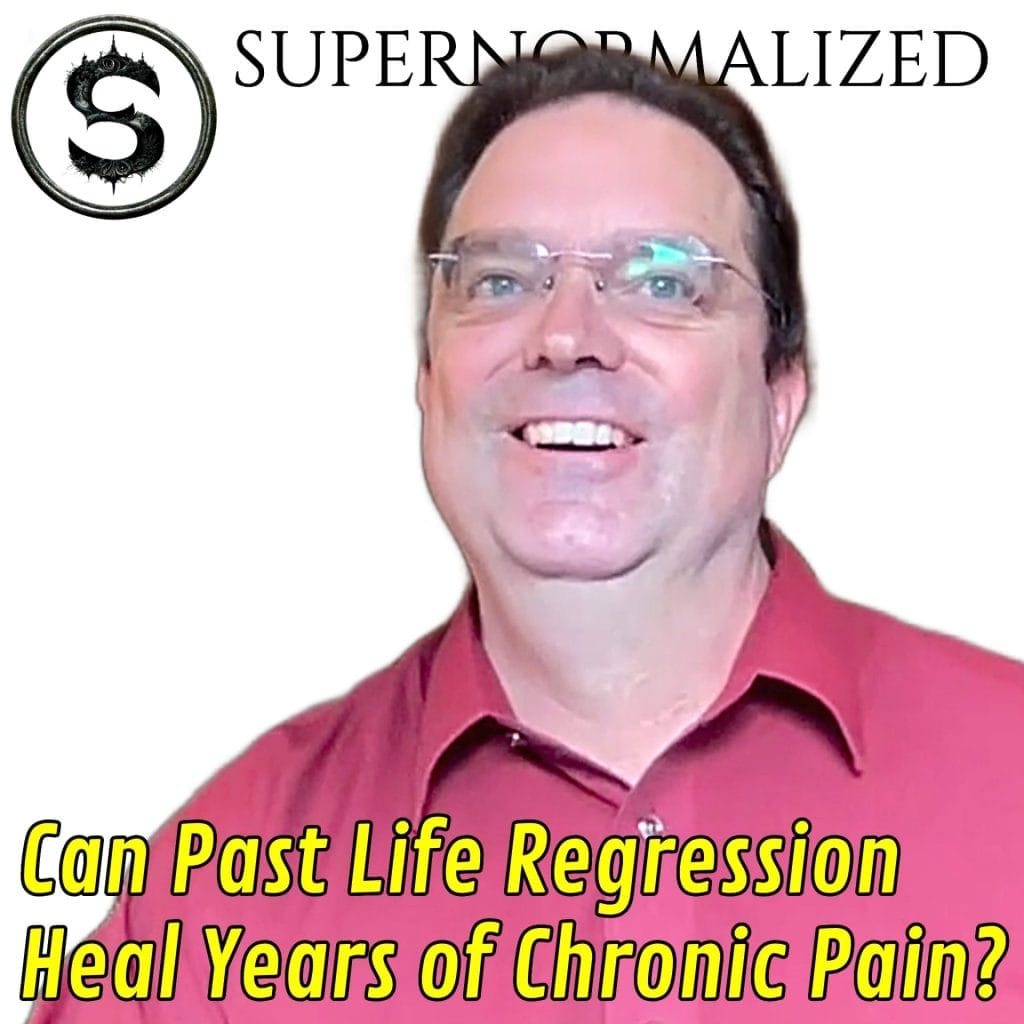


Past life regression therapy continues to gain scientific credibility as more practitioners document extraordinary healing experiences. Craig Meriwether, a hypnotherapist from Arizona, shares compelling evidence from his practice where clients achieve remarkable physical and emotional healing through accessing memories from previous lifetimes. His comprehensive research for his book spans decades of scientific studies, government remote viewing programs, and consciousness research to build a foundation for understanding how past life experiences might be genuine memories rather than imagination. This work offers a framework for both the believer and the skeptic.
Meriwether’s approach combines rigorous scientific inquiry with practical therapeutic application. His book examines everything from Neanderthal burial sites to CIA remote viewing experiments, quantum physics theories including holographic universe concepts, and the role of the pineal gland in consciousness. The research reveals fascinating connections between memory storage, electromagnetic fields generated by pineal gland crystals, and our ability to access information beyond conventional time-space limitations. These findings suggest that consciousness operates more like tuning into different radio frequencies than linear memory recall.
The therapeutic process involves guiding clients through past life experiences and into what Michael Newton termed the “soul world”. This is the space between incarnations where deeper healing occurs. Clients often discover soul contracts, karmic connections, and life purposes that provide profound insights for their current existence. This work frequently results in spontaneous physical healing, emotional resolution, and clarity about life direction. The three-hour sessions address not just past trauma but also the spiritual agreements made before incarnation, offering a comprehensive framework for understanding life challenges as chosen growth opportunities rather than random suffering.
Past Lives Guidebook on Amazon
https://arizonaintegrativehypnotherapy.com/
Transcript
Craig Meriwether (00:00)
This is for the extraordinarily curious person who is both a believer and a skeptic of all of this. And that is me. So when I went into this I, you know, one, I didn’t understand a lot of it. Of course, I still don’t. don’t have a PhD in physics or, or astronomy or anything like that. But
I didn’t understand a lot of it and so it took me a lot to research and look at these papers and and try to find a thread that could connect all these things together. I don’t know, is it true, is it not true? I work with people with this a lot and they have extraordinary experiences and they create extraordinary healing.
part of an email I got from somebody I had to work with and she says, 20 years of hip pain is gone. And I even know she had hip pain, but she had been all to the doctors, the physical therapist, the MRIs, she did all of it, and had this chronic hip pain that she just kind of lived with. That’s not even what we were working on. I had no idea she had hip pain.
She wrote back, it’s like 20 years of my hip pain is gone because of this healing I achieved in the spirit world.
CeeJay Barnaby (01:07)
Today on Super Normalized, I have the honor of bringing back Craig Meriwether. He’s an expert in hypnotherapy from Arizona and he’s written a book. Now the thing is that’s surprising to me is that when we actually had our interview last time, he didn’t even mention the book. And I had a little talk to him about that before we started our ⁓ recording today. And it turns out it just…
was something that popped in that he had to get out. And I’ve got to tell you, it’s a weighty tome. Over 450 pages and all different understandings of consciousness and how reincarnation works, karma, future pacing of understanding in hypnotic sessions, past life therapy, consciousness and memory, mystical views on all aspects of that.
and more. Look, it’s a really good conversation if you are into consciousness and personal evolution. And I’m really happy that he’s written this book. As of recording time, I’ve actually read 63 % to be actually really exactly honest. And I’m looking forward to reading the other part of it over the next few days. And it’s been a thoroughly enjoyable read.
Lots of detail there from so many angles that actually ties together in a really beautiful way. So if you’re into consciousness and personal evolution and maybe even past life regression, this one’s for you. On with the show.
Welcome to Super Normalized Craig.
Meriwether, Craig, this is our second interview. Thank you very much for coming on and agreeing to have another chat. And I’m really looking forward to this because we’re talking about your book as we already have been talking. And yeah, we’re going to outline what your book’s about, why you wrote it. And yeah, basically, this is like the Bible for understanding consciousness in a new way, as far as I understand it. That’s the way I see it.
Craig Meriwether (03:02)
Oh, wow.
Thank you. Wow. Super appreciate that. I’ve done a lot of podcast interviews this last year and a half or so. I mean like 70, 80 podcast interviews over those last 18 months or so. And I always remember yours. Yours is like at the top. It was so much fun. was such a great conversation. we kind of got to…
CeeJay Barnaby (03:20)
Yeah, thanks.
Craig Meriwether (03:31)
linked together again and talked about, maybe we can go little further now that I got this book out. I was really excited. I’ve been looking forward to this for a long time.
CeeJay Barnaby (03:39)
Yeah, great. Excellent. Excellent. Well, I’ve got to say your book is so thick. got 60 % of the way through and I literally just tip my toes into part four, which is about karma and soul lessons and just started in that part this morning. Cause I, I, what I do is I actually do a bit of biphasic sleep. So I, I go to bed and then I wake up about halfway through the night. And instead of fighting that and trying to fight back to sleep, I just get up and read a book until my eyes fall asleep again.
And I did that this morning and got into the karma and soul lessons and that was like, this is so juicy. I haven’t finished, but I got to there. So, ⁓ I’ve got to say credits to you. This is, there is so much information in this book. mean, like you were saying, as we were talking before that, ⁓ you’ve put all your interest into this and, it, your interests are very wide.
Craig Meriwether (04:15)
Thank you.
CeeJay Barnaby (04:28)
and expanding. I’ve got to ask you, how does your book integrate modern scientific research with ancient spiritual wisdom about past lives? Because that’s what you’re all about is past life regression. So for the people that don’t understand that, can you give us some framing around that?
Craig Meriwether (04:43)
Yeah, because
we’re talking about before you press the record button, this is the book I wanted to read. And the chapters were outlined by what I was interested in learning. It’s not that I knew this stuff already. It’s just as I’ve helped people with their explorations of past lives over the last decade or so, these questions come up for me.
And as I just learn and grow and over the years, I’ve it kind of opens up more questions. You end up having more questions than answers the more you look into this. And it’s so fascinating to me. I originally sort of branded myself, if you will, as a clinical hypnotherapist, meaning I’m more working with people with maybe trauma issues, post-traumatic stress disorder, anxiety.
maybe even pain control, things of maybe the context and is more focused on this current life. But what fascinated me about hypnotherapy and the training I wanted to receive was more based on my interest in the spiritual and the mystical and the mysterious and the esoteric. And the school I went to, the Hypnotherapy Academy of America, the reason I chose that school, one was this extraordinary
a background of, I don’t know, some 35, 40 years of being a school training just people in hypnotherapy, but that the last module, the last two weeks, and it’s two and a half months, it’s 500 hours, the last 100 hours is focused just on past life regression. And that’s what I wanted. And what I found fascinating and what was very exciting to me is they want you to have that
foundation of more clinical hypnotherapy. Here’s how you work with people when maybe they have a ab reaction, know, a more abnormal reaction to maybe experiencing something from their past. And so how do you calm the nervous system down? So you have this foundation of working with people in a, in their, when they’re upset, if their emotional state gets a little
intense because of the healing they’re needing to accomplish in the session you’re working on. It may just be something, not just maybe, but if somebody’s looking for more confidence, say they need to give a speech or run the big meeting or something, even like athletics, working in a more sports psychology kind of way. But that was the foundation of it all. But what really fascinated me was the spiritual. And I started off, however,
Focusing more on that clinical side because I live right next door to Sedona, Arizona. I’m in Flagstaff, Arizona I’m about 40 minute drive to the east Right near the Grand Canyon and Sedona if people don’t know is sort of a spiritual hub of Energetic activity so it draws a lot of people knowing to live there but to to visit and
That kind of work was being done there and I thought, I’m so close, how do I, you know, kind of, not compete, I don’t like that word compete, but how do I mark myself as a spiritual person, or not a spiritual person, but the spiritual work I’m interested in doing when it’s already being done in this extraordinary city of Sedona, Arizona. So I thought, well, maybe just to kind of start out and just kind of brand myself or.
focus on my work, I work on more the clinical side of things. And it’s great, know, Arizona Integrative Hypnotherapy, a bit of a mouthful, but it has that professional sounding tone to it. But I always had this kind of business of ⁓ doing past life regressions with people, because it’s always fascinating, it’s always so ⁓ extraordinary to…
CeeJay Barnaby (08:33)
Hmm. Hmm.
Craig Meriwether (08:38)
help guide somebody back into a past life, in the spirit world, and ⁓ connecting with their ancestors. And it’s always just kind of called me and said, I’d really like to focus on this work. And what kind of helped pave the path to that was the whole pandemic situation when everybody started doing Zoom sessions. And so now this opened me up not only to the rest of the United States, but really the world.
CeeJay Barnaby (08:57)
Mm.
Craig Meriwether (09:04)
I mean, look at us right now. We’re talking across the world. And so this work can be done in this manner because in and of itself, I’m not fixing anyone. I’m not doing the work for them. I’m guiding them. So as you close your eyes, you move into a more altered state of consciousness, into a trance state, you’re the one doing the work. And so whether I’m five feet from you or 5,000 miles away from you,
you’re allowed to do this work because I’m not doing it for you. I’m not here to fix you or I’m not here to fix anyone. So as that opened up to me the ability to work with people not just around the Sedona area, I really wanted to focus on that kind of work. And I thought what better way to kind of introduce myself to people than having the book.
And I thought, what kind of book do I want to write? And so I made my big old outline and then it just kept getting bigger and bigger as I asked more and more questions. And I just spent eight, nine months just researching and looking at scientific studies and looking at history and going back to anthropology. And we start off with the burial sites of Neanderthals.
in terms of looking at a brief history of spirituality and going through and linking that to when did past lives really start to be focused on in terms of other cultures and other times in history. And so that’s just one chapter. And we do a lot of science around consciousness and memory and…
Even the government research around remote viewing that was done here in the United States by the CIA. We go into a lot of that. And the idea being putting all these parts together by the end of the book, there’s a whole, my hope is that there’s a solid foundation that this is real, that you are having a real experience of a past life that you lived, you know, some time ago.
CeeJay Barnaby (11:05)
Mm.
Yeah, yeah. Well, I mean, there’s so much evidence now for, you know, past life experiences that back all this up, that actually help people to understand that this is real. it’s basically in our bones of our culture now and becoming more and more accepted, which is part of the reason why I do this podcast is to actually help people to understand these things, to reconnect to the truth of what we are now.
Craig Meriwether (11:19)
Mm.
CeeJay Barnaby (11:34)
How might, say for example, Carl Jung’s collective unconscious relate to reports of past life memories, according to your understanding in your book?
Craig Meriwether (11:44)
Yeah, okay, so another aspect of the book is that we go through different theories on how this is happening. So again, I don’t really come up with any sort of unified, this is exactly how it works, this is how it all happens. But I present from research that’s been going on for the last 25 years, if not 100 years, all the way back to
Albert Einstein and Carl Jung and Niels Bohr and all them. How reality may present itself to us? You have multiple dimensions. You have the possibility of the holographic universe. You have computer simulation theory and the possibility also of the collective unconscious as proposed and then of course.
researched by others since Carl Jung. And so I do a brief little, because each one of those are in and of itself books on their own. You can find huge books that talk about the ⁓ holographic universe and about the multiverse and multiple dimensions and all these things. So of course this isn’t an overall expanded look at each one of those, but just a brief two pager.
maybe three pages, yeah, just to like, here are some possibilities. And if you want more information, here are the books to look at. But in terms of the collective unconscious, it’s very, very interesting, because what if the experience you’re having in a past life isn’t maybe yours? You know?
CeeJay Barnaby (13:05)
Yeah, it’s a framing. Yeah.
That’s what
I loved about it as well. So I was thinking, so what if that is true? The important thing of that is it doesn’t matter if it’s true or not. It’s what happens to you from it. And I love that way you did that in there. was like, that’s that’s so important that people understand.
Craig Meriwether (13:26)
Yeah.
Yeah, it’s the learning, the understanding.
Yeah, and that’s a big part of not only the work I do, but hopefully what I’m trying to get across in the book. People have an experience. Now we can get the whiteboard out and we can get our graph paper out and we can say, well, it’s possible that somebody’s in a computer simulation. Somebody is part of the holographic universe. we understand, you know, just if people have ever had one of those holographic bookmarks,
CeeJay Barnaby (13:49)
Yes.
Craig Meriwether (14:06)
you got when you were a kid and you turned it a little bit and the dolphins jumping out of the water or something like that or the tigers roaring. And if that was a true holographic bookmark and it had that kind of weird 3D image to it and if you turned it, it changed how it looked. If you were to cut it in half, you’d now have two images of a dolphin jumping out of the water. If you were to cut it up into 100 pieces, you would have 100 tiny little, but it’d have the full
information of the entire photograph. So with the holographic universe is that every part of the universe contains the whole universe. so that’s how one, my ending, this is a 30 second explanation of the holographic universe. I’m sure physicists are going, no, not really, but.
CeeJay Barnaby (14:54)
Ha!
They probably do the same thing every time somebody tries to explain quantum reality too, when they listen to my podcast.
Craig Meriwether (15:02)
And so the idea around somebody’s experience, while it’s fascinating and interesting to have these conversations that can go on for hours, it’s about the learning, the growth, and the healing that can be accomplished with that experience. How that experience happens, whether it’s a construct of the subconscious mind to provide that healing, whether that’s
experience you really had at some point in this existence or you’re tapping into somebody else’s experience. It could be either any one of those or something else entirely. It’s about the healing, the learning, the growth you’re going to achieve in order to create your best life. And so in terms of Carl Jung’s
CeeJay Barnaby (15:34)
Yes.
It’s it.
Craig Meriwether (15:53)
collective unconscious, what if we’re tapping into this reservoir of information that started with the beginning of the universe and we can tap into that and pull in information around that. Again, it’s fascinating. Is it your information? Was it provided by somebody else, some other being?
CeeJay Barnaby (16:07)
Yeah.
Craig Meriwether (16:15)
It’s extraordinary and it’s head scratching and it’s mind warping to try and figure it all out. And I don’t know, you know, they’ve been looking at this for hundreds, hundreds, if not thousands of years, trying to come up with the theory of the universe, know, life, the universe and everything. And, you know, maybe we’re coming close. Maybe there’s too many theories now. But that’s why when
Again, by the end of book, maybe there’s more questions than answers. And so the focus and what I think talk about in the first chapter, within the first couple of pages, it’s about the healing in this current life. If you’re in pain, if you’re hurting, if you’re struggling with anger or anxiety, you don’t know why. And generally what happens is I’m not the first
CeeJay Barnaby (16:54)
Yes.
Craig Meriwether (17:08)
on anybody’s People have been, when I talk to people and we’re discussing the possibilities of doing like a past life regression together or some maybe more esoteric spiritual work, they tell me I’ve been years in talk therapy or I’ve been doing these other kind of reiki or breath work or something and I still hurt and I’m still in pain and I read Brian Weiss’s book or I read, know, Dolores Cannon’s book or Michael Newton or hopefully my book.
And this resonates with me. My intuition is sparking and I feel there’s something to this anger that may not be related to this current life. And I need to find what it is and release this. That’s one aspect of it, course, it can be just for discovery and for fun and more interest in your spiritual life and maybe the past lives you’ve lived not only with yourself or maybe you…
you know, connecting with other people in your life, your soulmates, your soul family, who’s been in your life, whatever kind of adventures have you gone on, so there’s that aspect of it too. But all in all, at the end of the day,
It’s about the learning and the growth. It’s about the healing. So that this life you’re living now can be a little bit easier for you. And you can open up to the love and the compassion and the empathy and hopefully grow to learn the spiritual lessons you’re here to learn.
CeeJay Barnaby (18:29)
Would you say that’s the criteria then for validating on past life memories being elucidated, the actual healing in itself?
Craig Meriwether (18:36)
Yeah, in terms of the work I like to do, it’s about the healing. At the end of the day, maybe I work with five people, I can’t prove one way or another, but at the end of the day, whether the experience you had was a real past life, or again, maybe a construct of the subconscious mind to create that healing. And so,
The focus and the attention is about the discovery, the insights and the healing that can happen. Even if past lives are real, in and of itself I couldn’t tell you if that’s not more of a Carl Jung, let’s let the subconscious mind create an allegory, a metaphor, a story to create the healing you need right now. And we’re going to do this through the context of a past life, or past life regression.
So again, it’s the focus needs to be on the healing and the learning and development that one can have because oftentimes a person’s past life experience isn’t.
so detailed that you can find historical accuracy. Now some people have that kind of thing that they can go back, I didn’t know anything about this part of the world and this part of history. And you look it up in the history books, and they’re like, oh my God, that’s for real, that really happened. Those were the kind of people they were using, Yeah, yeah, yeah, there’s lots of cases of that, not just in my book, but in other people’s books, of people.
CeeJay Barnaby (19:56)
Yeah, you do cite some famous cases in there.
Craig Meriwether (20:06)
Having even the extraordinary story of Om Sedi, which is, I talked briefly about her in the book, and having so much accurate information about Egypt, even though she grew up in Britain. She was born and raised in Britain, fell down the stairs, had a traumatic brain injury, and now all of a had all this past life information about Egypt and was, one story about her is she ended up living in Egypt.
And should we be able to go out to the desert and say, yeah, it’s over here. And they’d start digging and they’d find archaeological sites. know, that they, there’s like, yeah, it’s by this mountain, this town, these buildings were over here by this mountain in between this, in this valley. And they start digging and they’d find it. And so, yeah, there is, and that’s where, what’s again, head scratching. Because if that happens for one person, you know, why wouldn’t it be able to happen for everyone? And, and.
CeeJay Barnaby (20:40)
Whoa.
Love that stuff.
Craig Meriwether (21:00)
Maybe there’s a certain level of skill that needs to happen. Like I can play the cello. I can’t make music on it. You know, I’m not playing Royal Albert Hall or Carnegie Hall or anything, but I can play the cello. I can play the guitar too. I know like three chords, but I’m not Eric Clapton or Robert Cray or Jimmy Page or anything. So maybe it’s like that. are, there are people who have certain talents, certain skills who can tap into more information, tap into the
CeeJay Barnaby (21:13)
Yeah.
Craig Meriwether (21:27)
flow of information, their brains are wired in a way to take all this kind of 5D information from the universe and funnel it down into 3D information that the brain can access and understand. And again, it becomes such an extraordinarily fascinating conversation and discussion because at the end it’s like after three, four, five hours of talking over a cup of coffee or a bottle of wine or whatever, it’s like…
Are there any answers? Are we gonna have to wait until, again, there’s extraordinary science, but there’s extraordinary science that it’s a computer simulation. There’s extraordinary science that it’s a holographic universe. There’s extraordinary science that it’s the multiverse. And it’s like, what? Yeah.
CeeJay Barnaby (21:58)
Mmm.
Yeah, well, mean, it gets very Zen, doesn’t it really? In a way, you
think about it, it’s like everything is real, nothing is.
Craig Meriwether (22:19)
Yeah, yeah, and it’s the same was their sort of research around collective unconscious and so Which is it? You know you see the the fascinating information about remote viewing that the government US government and apparently the Soviet Union was spending millions of dollars and decades on To try and the idea around remote viewing really quickly
is that you can move into that meditative, trance altered state of consciousness and move your mind, move your consciousness to another location and scout that location. And there’s people who are so good at doing that, they could see underground bunkers and files and people’s names. I talk about this in one of the chapters because it’s so fascinating that when they started this program at Stanford, they got in big trouble with the
CeeJay Barnaby (23:05)
Yeah.
Craig Meriwether (23:12)
here in the United States, the National Security Agency, the NSA, because they thought they were somehow spying, and they were, but they were spying on their remote underground bunker, their top bunkers. And the government would not have kept that research going if it didn’t work. If they weren’t having results, successful results,
CeeJay Barnaby (23:32)
For sure.
Craig Meriwether (23:36)
they would not have kept that program going for a couple of days. And I would assume still going. They probably to the office across the hall and called it something else. If it’s successful, I mean, there’s one guy who the claim is, according to the research, and lot of this came out through the Freedom of Information Act that we have here in the United States.
CeeJay Barnaby (23:41)
Yeah, yeah, they’ve just shut it down.
Yeah, that’s right.
Craig Meriwether (23:59)
So you can get declassified government documents or you see those documents, it’s all redacted and you get some information. The top top secret stuff still scratched out, but you can get a lot of information. one of the experiments they did was the Voyager satellites were gonna go by, the satellites, were gonna go by Saturn back in the early 1970s. And we didn’t have very
good information about Saturn at that time, we, like I was a part of it or I know anything about it, but all the astrologers were gonna get information about Saturn and these satellites were gonna take pictures and send them back. And so they thought, well, that’s six months away, let’s have one of our remote viewers remote view Saturn and see what kind of information they can get. And so this guy remote viewed Saturn and… ⁓
I’m sorry. He’s not remote viewing Saturn. He’s remote viewing Jupiter. He’s remote viewing Jupiter, because the larger spacecrafts were going to go by Jupiter. And he starts talking about the rings that he’s seeing. He started talking about the other aspects of the planet. And everybody’s all, that’s not Jupiter. That’s Saturn. Because Saturn has rings, not Jupiter. And…
Everybody’s a little bit disappointed. He’s embarrassed that he remote viewed the wrong planet. And of course it has rings, because everybody knows Saturn has rings. And so he’s a little bit embarrassed, and everybody’s disappointed. They just kind of forgot about it until the Voyager spacecrafts flew by Jupiter, and there were rings around Jupiter. And all the other information he had pulled in was accurate. And so it…
It’s not just, okay, I can see across town or I can even see around the world and I can see underground bunkers, secret underground military bunkers. Seemingly, this can go to the other planets. It’s fascinating. And forward and backward. they would do things where, so they up these experiments where they would remote view a person somewhere in town.
CeeJay Barnaby (25:51)
Yeah, and forward and back in time.
Craig Meriwether (26:04)
So they had the double blind experiments. had one team A and team B and team A would be the remote viewers. Team B would go out somewhere around San Jose, San Francisco where Stanford was. And ⁓ they would just park somewhere or sit in a cafe or something or be in a park. And the remote viewer would at a certain time say, okay, this person is here.
And then they would connect and say, where are you? It’s like, well, yeah, I’m here at the park by the fountain. And they would be correct. Well, what they started doing was Team B would put the location in a sealed envelope, not give it to the person traveling. So the person traveling to the place doesn’t know it yet. They’d put it in a sealed envelope a few days before. The remote viewer would remote view it a day before.
tell where this person’s going to be, the person would get in their car, then open up the envelope, drive to the location, that’s where they were supposed to be. And so they started seeing a future. They did one where Palo Alto has some sort of big…
think it’s like a recreation center and they had like swimming pools and all this kind of thing. that was one of the locations that they were supposed to remote view. And so the remote viewing that are talking about the pools and the size of the pools and how much water they hold and all the different places. And they said they had these big containment tanks outside. Well, everything was pretty accurate except for the containment tanks. There was no containment tanks like these huge water containment tanks out back of this recreation center.
And about 20 years later, Palo Alto was celebrating its 100 years as being a city. And so they had one of those celebratory photographic books of the history of Palo Alto. And in that book was a photo of the recreation center from 1920 that had the big containment tanks in it. And it’s like the guy was right. It was just, had reported it 60 years beforehand or 80 years beforehand or whatever it was.
CeeJay Barnaby (28:05)
Yeah, it goes through time.
Mm.
Craig Meriwether (28:14)
And so there’s all this evidence that not only can you just remote view another part, you can send your consciousness to another part of the world, potentially the universe, but you can send it into the future, you can send it into the past. One of the things…
to kind of, there was a lot of government stuff going on, lot of CIA stuff going on using this remote viewing. And one of the things about it was focusing on the Soviet Union. And they knew something was going on with the Soviet Union because of troop placements and activities in a certain area. And they wanted to see what was happening because the satellites couldn’t access it or something.
And so they had a remote viewer and basically this guy said, they’re building the world’s largest submarine. And he like gave all this detail about the submarine. The problem was it was like too far away from the sea to make any sense. Why would you build a submarine? It’s like building an aircraft carrier, like, you know, 10 miles away from the sea, whatever that is in meters, like, you know, know, 15 meters away from the sea. It doesn’t make any sense.
You build it next to the water and you push it into the water. And so it was like, well, that’s odd ball that they would build it so far. It doesn’t make any sense. I don’t think it’s right. Why don’t you remote view the future and tell us how they’re going to do that, get it to the sea? So he remote viewed the future about the submarine and saw they were digging trenches from where the submarine was all the way to the ocean. And that’s exactly what they did. Because they could get satellite photographs of that. Because I guess the
submarine was in a warehouse or building or something being built. And so they saw them digging huge trenches to the ocean to get the submarine there. And when they finally saw the submarine, it was exactly as the guy described, one of the world’s largest submarines. know, again, this is government stuff. This isn’t like, you know, woo woo, new agey community doing this. This is the United States government is using remote viewing to spy on the Soviet Union back in the seventies and eighties.
CeeJay Barnaby (30:03)
Mmm, yeah.
Craig Meriwether (30:18)
and getting accurate information.
CeeJay Barnaby (30:20)
this, this, so going back to the book and how this all integrates with that, it speaks to the fact that we all have these abilities and these abilities are a part of our toolkit as human beings. um, when we embrace the understanding that this is all possible, then even, even without embracing it, you can still have actually healing, healing occur from, you know,
like finding your own way into an understanding about yourself through past life regression.
Craig Meriwether (30:53)
Yeah, yeah. And
there seems to be a biology to it. And there’s some, again, research out there that you can look up. One of the best ways to find this information is, of course, on the Google machine. And if you go to Google and you type in Google Scholar, what you get is scholar.google.com. what that is is research papers. that scholar.google.com.
focuses on in terms of its search is research papers, published research in medical journals, scientific journals. And so you can type in, this is for an example, type in hypnotherapy and anxiety, and you’ll get research showing the efficacy of using hypnotherapy to deal with stress and anxiety and anxious feelings and things like that. this is real research, and one research paper that has come out,
within the last few years is focusing on the pineal gland. And of course there’s a lot of information. ⁓ Dr. Joseph Spindza talks about it a lot in his book, what’s the last one he wrote? whatever the last one he wrote will come to me in a second. And the pineal gland gets focused on because it’s an unusual structure. Now the pineal gland’s about the size of a pea.
about the size of a grain of rice. And if you can think of maybe a golf ball, maybe a racquetball in the middle of your brain, in that part of the brain, it’s towards the back of that racquetball, that golf ball. And its main job is melatonin production. So it helps us put to sleep and as the sun rises, the melatonin goes away and we get more cortisol and adrenin and we wake up and we go about our day.
Well, the pineal gland is filled with tiny, tiny little crystals that have nothing to do with melatonin production. And there’s no evolutionary need for these crystals to be in the pineal gland. And as Dr. Joe Dispenza points out in his book, Super Normalization, something like that, in his book and of course other books out there, and I mentioned in my book, that
These crystals can produce an electromagnetic field when pressure is applied. And if you’re a Dr. Joe Dispenza fan, you know he has that specific kind of breath technique of pulling in breath from kind of the root chakra and up your spinal cord and into the brain. the reasoning behind that is to help start moving the cerebral fluid to apply pressure around the pineal gland, therefore creating this electromagnetic field around the pineal gland. There are
other research papers that indicate that this creates kind of an antenna-like effect, you know, and that it helps pull in information that then can be turned into image and sound. It’s called a transducer effect. So back in the day, really quickly, if a TV, if you wanted to watch a TV show on Thursday night at 8.30,
⁓ You had to turn on your TV, turn it to right channel, and at least here in America, there would be a TV studio, film studio in Los Angeles. They’d have a big cassette of that week’s episode of that TV show. They’d put it into their equipment. They had a transducer in that equipment. would take that image, that sound, turn it into a frequency, and with their antenna and their satellite dish, they’d shoot it up into the airwaves.
Now this is that thing of when you’re driving around in your car or you’re at home and you turn your stereo and you can turn it around the dial and you can pick up different frequencies. We do that with your TV as well. Nowadays we have Wi-Fi, have cell towers and all this other stuff in there as well. But back in the day, back in the 70s and 80s, we were just picking up certain frequencies of radio signals and TV signals. Well, at 8.30 on Thursday night, I wanna watch my TV show. I turn on my TV, I turn it to channel 10, and channel 10 creates
an effect with the antenna on my roof or the rabbit ears on my TV, I start microscopically vibrating to the same frequency as that TV show and it pulls in just that frequency. So I don’t get three or four other TV shows at the same time, I just pull in that one frequency into my television. The frequency, I also have a transducer in my TV. That transducer in my TV turns that frequency back into image and sound.
and now I can watch my TV show. There’s research out there that implies that the pineal gland is the transducer. And it’s pulling in information. You know, when we have an intention, I want to go back to the past life where I met my soulmate, I want to go back to past life where I created this hurt and this pain, this anger I’m feeling. I’m going go back to past life where I is influencing the purpose I have in this life. That’s the channel. You’re focusing on that pulling in information.
Your pineal gland is turning that back into image and sound. But again, it’s sort of like pulling like 5D information into a 3D brain, into a 3D world. And so you’re gonna get images and audio relevant to your experience here on Earth, even though you’re pulling it from the universe. people, one research implies that memory and consciousness are held in zero point field, which is that.
universal field that binds the universe together when Star Wars calls the Force. If you were to look at an atom, the atom that creates all of us, all things, all the entire universe, if you look at an atom with electron microscope, you see the quarks and the subatomic particles. But if you keep going and going and when you see the essence of what an atom is, it’s this vibrational field. That’s a zero point field. Because as you bring it down to absolute freezing, zero.
It still moves. It should be still, but it still moves. And so they call it zero point field, or the field, or the force in Star Wars, or something else like that. And this research implies that that’s where all the information of everything, life, the universe, and everything is held. And this brain of ours is an antenna that’s pulling it in. Even like the memory you had of ⁓ your lunch yesterday.
or the vacation you took a couple months ago, or you’re thinking about high school, or being a little kid, you know, the birthday party you went to as a little kid. And that information is not held in the brain, you’re pulling it from somewhere else. And your brain, and specifically your pineal gland, is what’s turning it back into image and sound and feelings, maybe smells. you know, if you go to your beach vacation, you may remember the smells of the ocean and the feeling of the water.
lapping onto your feet as you walk down the beach. That’s all apparently, according to some research again, held within zero point field and we’re pulling it as we kind of changed the channels. And now I want to think of my beach vacation. Now I remember what the lawyer said at the meeting yesterday. And now I want to remember that restaurant we went to and how do you get there. It’s again, it’s a fascinating.
aspect of being human and it’s sort of like you’re swimming in the shallow end of the pool remembering lunch yesterday, remembering that vacation, remembering high school. What we do with past life regression is we just go over to the deep end. And so just as if somebody can remember maybe back in high school, anything in high school, whether it’s the high school run or high school math class or smoking behind the gym or your girlfriend, your boyfriend, the friends you hung out with, if you played sports, if you’re in band, if you’re in theater.
CeeJay Barnaby (38:09)
Mm.
Mm.
Craig Meriwether (38:25)
You remember these things. That’s just like what we’re doing is we’re going over to the deep end of the same pool. We’re just going over to the end and going a little bit further.
CeeJay Barnaby (38:27)
It sort of speaks to the…
Let’s speak to that idea of the universe being like in a plasmatic state and that all time is now. And the only differentiation is how we perceive it or receive it and then convert it into something of an experience, which then also allows you the understanding that if that is true, then all of our life is immediately here and now and available for change.
Craig Meriwether (39:02)
Yeah, and Juan, this is where you get into the collective unconscious. Could you not also then tap into other people’s experience?
CeeJay Barnaby (39:10)
Well,
we are essentially one on a greater scale of things. If we expand all the way out, then we’re all infinite. yeah, yeah, hi yourself.
Craig Meriwether (39:14)
Yeah. And you
see, it gets bigger and bigger and bigger, and it gets a little mind twisty. The more questions you ask, the more questions you seem to have. And so it’s a fascinating discussion to have and to research and just keep looking at.
CeeJay Barnaby (39:26)
It does, yeah.
How does karma fit into all of this?
Craig Meriwether (39:41)
Well, you know, karma, there’s two interesting aspects of…
In this theory, or maybe proven way our lives work of coming back to earth to live these lives again and again, not again and again, but to experience different lives for our learning and growth. It’s sort of like, at least with, as explained in the Michael Newton books of Journey of Souls and Destiny of Souls, we have the soul family, the soul group.
and we all kind of move together and grow together, sort of like you meet your friends in first grade, least in America, that’s how we do it in elementary school. We start in first grade, we go to 12th grade, and then we go to university. Well, you meet all your friends in the first grade and you just kind of go through school together until you graduate high school and then you go to the university, you go to college and maybe get your master’s degree in life or whatever.
So we keep having these experiences to move up, to level up, to graduate the second grade and move to the third grade, to get out of elementary school and go into junior high. And we keep having these experiences for our own learning, our own growth, to help our friends learn and grow, or to create healing if maybe something in a past life wasn’t resolved. And the karma isn’t that…
you’re being punished or you’re doing something bad, it’s that either the learning hasn’t been completed or there needs to be some resolution to something that happened in the past. So some of this stuff may take multiple lives to experience. Sort of like, again, here in America, at least, you have Algebra 1 and Algebra 2. It’s Algebra, but it may take several classes or even several years.
to understand the entirety of algebra, then you go on to calculus, then you go on to trigonometry. And so to get a full understanding of higher math, it may take several years, seventh grade, eighth grade, ninth grade, tenth grade, in order to finally complete the understanding. So with our lives here, it could be that we need to experience another life in another way in order to either heal,
something that may have happened to us in the past that we were unable to heal or shake off, or maybe we experienced life as somebody who caused some damage to other people. And that needs to be resolved in a way, I not punishment so much as looking for resolution. So that’s, again, the kind of 60 second discussion of ⁓ extraordinarily.
CeeJay Barnaby (42:19)
rebalancing the universe.
Craig Meriwether (42:27)
complex philosophy. But the other aspect. Yeah, I know.
CeeJay Barnaby (42:30)
But you’ve got so much stuff in here that they
all have to be snippets because there’s just so much.
Craig Meriwether (42:36)
And so there’s the aspect of karma and then there’s the aspect of the sole contract or the sole agreement, which again pops up a lot in the Michael Newton books, and of course I talk about it in my book. so there’s this interesting, again, conversation about what’s predestined and what’s free will and what is karma. And the idea as
again looked at in the Michael Newton books and what’s fascinating about ⁓ Michael Newton books and why I kind of focus a lot of my attention on his work is because it just wasn’t a couple of people he worked with. It wasn’t just, this is a guess, this is my opinion, it’s not something he channeled, he wasn’t a medium or anything. He did research for decades with thousands upon thousands and thousands of people, starting in the early 1970s and going all the way till he
passed away and the Michael Newton Institute is still doing this research. So pretty much for the last least 50 years, they’ve been doing research into this work and what they find is people have similar experiences of that life between lives, that soul world when we’re not incarnate here on earth, but we’re a soul and we’re with our soul family or soul group or spirit guides. And one aspect of that experience is when it’s been decided to come back to earth.
We’re choosing the experience. And this is where that kind of soul contract or that soul agreement is. like, well, your mother’s, you’re deciding who’s gonna play the role of your mother and what aspects of her are going to help lead you to your growth and to your healing. Doesn’t mean it’s gonna be rainbows and unicorns. And again, that’s where it gets mind twisty. Because if, especially if you’ve had an unsafe home growing.
up as a kid. It wasn’t a great experience, maybe even traumatic experience. Why would you choose that? And so it’s not to blame the victim or anything like that, but it becomes somewhat empowering because, okay, well, what then was I to learn or how was I to grow or how was I to understand healing having had that awful experience? And so if you look at it through the Michael Newton lens,
the journey of souls lens for preparing this life. just, it’s not random.
It’s picked, but there’s also a certain aspect of free will around it too. So you can turn the left, when you reach the corner, can turn left, you can turn right, you can move forward, you can move, you can turn around and go back to where you were. So there’s an aspect of it, but there’s a certain need for things to fall into place, to meet the right people at the right time. And so, and that’s again where karma comes. If you’re not fulfilling,
that role that you’re meant to play or the learning you’re supposed to understand and maybe it’s like, okay, well you need to do it again. And so it’s this extraordinarily complex.
philosophy around what is karma from maybe a past life that needs to get resolved or healed on top of what was planned beforehand as a soul agreement with other people in your life in order to help with that healing and that learning. And again, it becomes extraordinarily complex. that’s in the past life regression. We hit upon those spots. So that’s why these things can be three, three and a half hours long.
CeeJay Barnaby (45:58)
Mmm.
Craig Meriwether (46:03)
Because we’re not only experiencing past life, once that past life is over and you get to the end of that past life, experiencing that death in a safe way, in gentle way. But that’s where a lot of the impressions upon that life get locked down. The decisions about life and love and money maybe get held onto and then connected to a next life that need to be resolved. Where those connections start to happen. But once you end that life,
and move up into soul world, that’s where we can experience the deeper healing. And that’s what’s important about this work, is finding that healing up there in the soul world, whether it’s that past life or maybe another past life, or maybe there’s a thread of issues between past lives that somehow all connect, that need healing and resolution. But what we always go to the healing place, and we always go to the current life selection room is what Michael Newton calls it.
When it’s been decided that it’s time to come back to earth, who are you deciding to be your parent and why? Siblings. What’s your purpose? What’s your ultimate goal? What’s your mission? Is there a hurt and pain that needs to get resolved while you’re here? What is your main purpose in coming down here and what are you here to learn? And that creates an extraordinary insight, as you can imagine, and helps somebody move forward in fulfilling.
what they’re here to fulfill once they get clarity around that. But again, it’s also that mind twisty thing of especially if you’ve had a painful life, if there’s a lot of hurt and anger because of what’s happened, it’s like, well, it becomes twisty because of like, did you agree to that? And why? Why would somebody go through something like that? And so again, it’s oftentimes maybe creates more questions than answers, but
CeeJay Barnaby (47:56)
Mmm.
Craig Meriwether (47:56)
When you realize, I think, in my own personal experiences, even though maybe there was some pain and there was some hurt in life in the past, in this current life, when you look at it through the lens of journey of souls and the possibility of agreeing to this, it actually becomes a little bit empowering. It doesn’t make the hurt or pain maybe go away or maybe it made it
CeeJay Barnaby (48:19)
Yeah. Yeah.
Craig Meriwether (48:23)
positive experience and doesn’t mean that people need to get out of jail or that protective orders need to go away or anything like that. But it’s like, okay, well, I had that much control over it. Why did I agree to go through it? Maybe you’re going through it for somebody else and their healing and their experience. I don’t know. Again, more questions than answers, I think, but.
CeeJay Barnaby (48:41)
Hmm. Yeah.
Part of your book you’ve got exploring the future as well. How does that part come into play in a past life regression session, for example?
Craig Meriwether (48:49)
Yeah.
I generally, I don’t, I don’t do as much future exploration. I don’t, I guess I don’t promote it as much. I don’t even have it on the website. And the reason why is one, I think people can get locked into, okay, this is what
CeeJay Barnaby (48:56)
Or is that something you do extra?
Craig Meriwether (49:14)
the future’s gonna be like. And now there’s two aspects of this that we can look at. Sort of like, you can remember your past, again, what happened two weeks ago, what happened 20 years ago, what happened in high school, you’re looking into the past. Then there’s a larger aspect of looking into a past life, back in the 1800s, back in the 500s, back in 5 BC. Well in the future, you’re also, there’s two aspects of it. You look in the future of this current life, you know, you’re…
40 years old, what’s it gonna be like when you’re 55? know, you’re 55 years old, what’s it gonna be like when you’re 80? But there’s also the aspect of what’s it gonna be like 300 years from now? Or a thousand years from now? What I found in terms of taking somebody into the future of this current life is it’s only a potential. But people can kinda get, because of the extraordinary-ness of it or the information they receive, they kinda get locked into.
it and it never felt right to me. just kind of felt off. And then when people looked into the far distant future 300 years from now, sometimes it’s pretty dystopian. you know, yeah, it’s like, don’t know. But again, it’s also just a potential. And that’s, and again, that’s the mind twistiness of it. It’s all happening right now, is it not?
CeeJay Barnaby (50:09)
Yeah.
Yeah, to like a prescription.
Whoa. It could be on the life they depended to pick then, right?
Yeah, yeah.
Yes.
Craig Meriwether (50:38)
And so are you actually looking at the future or are you actually only looking at potential future? It’s sort of like that law of attraction thing. You don’t get what you want, you get who you are. So if you change your energy and all that, you can create a different future potential. So the potentials are out there. However, if time is happening now, all you’re doing is moving your consciousness from right now to the next channel.
CeeJay Barnaby (50:46)
Mm.
Mmm. Mmm.
Craig Meriwether (51:02)
you know, that’s happening right now. future is happening. So it’s stacked on top of each other. The past is not behind you, the future is not in front of you. It’s happening right now. You’re just kind of altering your consciousness to look at it maybe at a different radio station. So it’s the idea of like, you’re in the middle of reading a book and you’re at page 120. Well, the earlier pages are still there, but the future pages are still there too. You could turn to page 300.
You know, it exactly makes sense because you cut out a bunch of information, but that part of the book is still there. So you could look into the future of that book and gain that information. And it might be helpful to learn who did it and see how they set you up writing style to learn how to do it and how they maybe…
projected who is going to be the person who did it earlier on the book. But the entire book is there. All you’re at is like right now on page 120. So the idea around future, just like looking at the past, he’s like, well, then you can look into the future because it’s there. But is it? Because there’s a lot of, it’s just potential. So in terms of that work, mean, even Brian Weiss.
CeeJay Barnaby (52:13)
Yeah, that’s right. Yeah.
Craig Meriwether (52:20)
He was the one who really kind of focused on that in the 90s and early 2000s. He doesn’t do that anymore. When you go to one of his big retreats, one of his three day or five day retreats, the end session, the last session of that workshop or that retreat was always a future visualization. Well, let’s look into 300 years from now, let’s look at a thousand years from now. He stopped doing it because it was so depressing. Now this being
It doesn’t mean that
people don’t have awesome future visualizations. It just meant that there were people who were getting something not so pleasant. So again, it’s like this idea like, well, somebody looked a thousand years into the future and it was all rainbows and unicorns and flying cars and everybody was at peace and harmony. Somebody else, not so much. So which is right? And so even Brian White stopped doing that because it’s just like, it’s…
CeeJay Barnaby (52:55)
Yeah.
Yeah.
Both are right depending which one you choose.
Craig Meriwether (53:15)
too much for people and it’s too much for me. ⁓
CeeJay Barnaby (53:16)
Yeah, yeah, there’s probably potentially no benefit in the end anyway, because
why focus on the future when you can be really focusing on being actually here and now?
Craig Meriwether (53:26)
Yeah, and the other thing is like, well, if it’s all going to crap, then what’s the point? Why try? And you can try to explain, but that’s just a future potential. And then we talk about that in the book. When we get to that chapter on viewing the future, one aspect of that work, if somebody was to do it, was to find, let’s say somebody,
CeeJay Barnaby (53:31)
Yeah, it makes you very young.
Craig Meriwether (53:50)
doesn’t have a good relationship with their brother. I think I’ll use this as an example in the book. They don’t have a good relationship with their brother. They can look into the future. Well, one aspect of that is that they get back together and they have a wonderful relationship because healing happened and forgiveness was offered. Or the other potential future is that they never get back together and there’s more anger and more hostility between the families even afterwards.
and it becomes even worse afterwards, after maybe the brother dies or something. So those are two future potentials somebody saw. So the potential is they can choose one. Which one works better for you? Would you rather get back in touch with your brother, find healing in the way you need to? And that can change somebody’s future. By seeing the future, seeing the potentials out there of, well, I get to choose.
And then they can start doing the work they need to do on themselves or within that relationship. Now, of course, free will, the brother could just hang up the phone or never respond back. But, you know, at least in themselves, they say, I did what I could to salvage that relationship and heal myself by seeing the future and how choosing a different path would have been more hurt for me. So there is, you know, usefulness in it. It’s just…
And I think just because of the books that are out there, I know Brian Weiss has a book about future visualization, but I think so much attention is on past life regression that I don’t think a lot of people focus on. just, the question came up in my mind and I made an outline and I thought this might be interesting. thought I’d write it as a totally different book and I thought, let’s just write it here.
CeeJay Barnaby (55:40)
Yeah, well, I’m looking forward to reading those parts. I’m actually in the, as I mentioned at the start, part four, calm and solace, is where I got up to, because the book is a weighty term.
Craig Meriwether (55:40)
but got a lot longer.
Yeah, it’s like
450 pages. know, and what was funny is I was working with my editor and we had a big back and forth because I didn’t want to put the bibliography in the book because at the size the book is, it’s like six and a half by 10. So it’s just a little bit bigger than a quote unquote normal size book. Books are generally six by nine. This is six and a half by 10.
and
we had a big argument about the bibliography, about all the research papers and things, because it was gonna be 70 pages. And I said, it makes the book more expensive, it makes it, I’m wasting more trees. Nobody reads the bibliography. Certainly nobody’s gonna read a 70 page bibliography. I’ll put it online. I’ll just put a page and say, if you wanna see the bibliography, go to this webpage. And she was like, well, I think it’d be a little more valuable to people if some of it was in there. So I think we came up with,
CeeJay Barnaby (56:29)
That’s important.
Craig Meriwether (56:52)
I eight or nine pages of bibliography in there about some of the science. But it’s all in it because I didn’t want to be a stupid, know, even stupidly longer book. But it’s like, you know, 450 pages of just the science of memory and consciousness and time travel and looking into the future and looking into the past and remote viewing and and it was it was a plus.
CeeJay Barnaby (57:06)
Yeah. ⁓
Yeah, and covering traditions from all over the world.
Craig Meriwether (57:18)
whatever eight, nine months of my life. Like, look, research was hella fun.
CeeJay Barnaby (57:23)
Yeah, but the other thing that people shouldn’t understand, it actually covers other understandings from different traditions worldwide in both reincarnation and also future understanding of events. ⁓
Craig Meriwether (57:36)
We look at
different religions and their focus on prophecy. What’s interesting is this little bit of Christianity. Christianity has a great history, an amazing history of prophecy, looking into the future. Joseph of the famous coat of many colors looked into the future, saw the Pharaoh’s dreams and predicted the future. ⁓ Daniel and some of the others, but there’s not a lot about past lives in there.
CeeJay Barnaby (57:41)
Yeah, it’s fantastic. Yeah.
Mm. Mm.
Craig Meriwether (58:06)
about leaning into the past. it’s, then we, of course, we look at other aspects of different religions, of course, Hinduism and reincarnation. And again, going all the way back to Neanderthals and some of the kind of lost tribes of South America. Some have kind of come out and of…
come out into the civilization and talked a bit about their spiritual beliefs. And so what we know about that. And so again, just kind of seeing this huge historical perspective again in bite-sized little chunks, because each one of those could be a 400 page book on its own, but bite-sized little chunks of what do the world’s religions think of past life regression and reincarnation? Some are into it, some are not.
Where do they think about future prophecy? Some are interested in it, some are not. let alone what is the government’s interest in past lives or remote viewing and seeing into the future.
CeeJay Barnaby (59:00)
Mm, it covers so much. Now
I’m gonna ask you, give us like a one paragraph pitch of who this book is for.
Craig Meriwether (59:10)
This book is for the extraordinarily curious person who is both a believer and a skeptic of all of this. And that is me. So when I went into this book, I, you know, one, I didn’t understand a lot of it. Of course, I still don’t. don’t have a PhD in physics or, or astronomy or anything like that. But
I didn’t understand a lot of it and so it took me a lot to research and look at these papers and read the books and try to find a thread that could connect all these things together. But the reason I wrote the book is because, I don’t know, is it true, is it not true? I work with people with this a lot and they have extraordinary experiences and they create extraordinary healing. I start the introduction, the very first line of the book.
is part of an email I got from somebody I had to work with and she says, 20 years of hip pain is gone. And I even know she had hip pain, but she had been all to the doctors, the physical therapist, the MRIs, she did all of it, and had this chronic hip pain that she just kind of lived with. That’s not even what we were working on. I had no idea she had hip pain. But I always check up on people afterwards, you know, a couple days to see how they’re doing, how they’re integrating the information, they have any questions, need any help.
And so I reached out to her a couple of days later and said, how are you doing? If you need anything, please let me know. She wrote back, it’s like 20 years of my hip pain is gone because of this healing I achieved in the spirit world.
I didn’t even know she was doing it because there is a certain aspect of privacy when people are doing their healing work. We were having a conversation, but I’ll give them the privacy and the silence they need to create the healing. That might be two minutes. It might be 20 minutes. And she was having a big struggle.
CeeJay Barnaby (1:00:49)
Mm.
Craig Meriwether (1:01:01)
with some healing, but she’s there with her guys, she’s there with the other healing beings up there in Spirit World. And she created this physical healing by doing this work. And so you have these experiences and there seems to be something to it, but I don’t quite understand memory, I don’t understand consciousness, I don’t understand what the big deal is about the pineal gland, what’s the crystal situation all about? I read about it in Joe
Dispenza I wanted to find out more about it.
And so I was curious. I was also skeptical that that remote viewing stuff I had heard about, you know, there’s a George Clooney movie, Men Who Stare at Goats. That’s what that was all about. It seems kind of, you know, ridiculous. But I’d heard about it, you know, because I’m into the you know, esoteric thing, the paperbacks we got back in the 1970s about Bigfoot and UFOs. And that was fun to
look at as a kid and I heard about remote viewing and it’s like, well, is it real? And you start reading because of the Freedom of Information Act, you start reading these real declassified CIA documents about it. it’s what they were working on. so the book is for anyone curious about it, anyone who’s skeptical about it, anyone who’s a true bookworm, if you’re all those at the same time. And that’s why I wrote it for myself. When I worked with my editor,
CeeJay Barnaby (1:02:00)
Yes.
It is, it is.
Yeah.
Craig Meriwether (1:02:26)
And she said, you know, who’s this book for? And you’re supposed to say, it’s a young adult book about vampires and romance. And so it’s for 14 to 18 year olds or it’s for, you know, mathematicians in their thirties who have gotten their PhD. So whatever, you’re supposed to tell the editor who the book is for. And I said, it’s for me, you know, because I just wanted to find out all this information and why not put it, you know, because of you know, OCD, I got to do something with the information. So I started writing it.
organizing it and finally and all of sudden, there’s a book here, I think. So I think that was a long answer to a short question. what I wanted to do was something I hadn’t read before. God bless Brian Weiss and Dolores Cannon and all of the books, but sometimes they’re just stories, other people’s stories. And I get it. Or the reincarnation stories.
Like Ian Stevenson writes about in documentaries you see on YouTube is fascinating beyond belief or sole survivor that one about the little kid who in the World War two pilot It’s fascinating about believe but after a while. It’s like okay. I get it How is this happening? What are the possibilities? What how are people tuning into how’s that little kid tune? that his story or does that pilot need to be healed because of the crash into the Pacific Ocean during World War two?
CeeJay Barnaby (1:03:33)
Hmm. Yeah.
Yeah.
Craig Meriwether (1:03:47)
There needs to be healing around this and this kid’s the antenna or the avatar or the, you know, how is it?
CeeJay Barnaby (1:03:54)
Yeah,
that’s what I got from the book. It’s like you’ve taken that extra step and given a framework to all of possible understandings around what this phenomena is. yeah.
Craig Meriwether (1:04:05)
Yeah.
And again, I don’t think I come up with any specific answers other than maybe there’s more to add. That’ll be the next book.
CeeJay Barnaby (1:04:12)
Nah, you lead people to their own understanding.
I’ve got to ask you though, you didn’t talk about
your book at all when we had our last interview. Were you actually still, were you actually writing it when we had that interview?
Craig Meriwether (1:04:25)
No,
just wrote it, when did we talk? Yeah, yeah, yeah, I started well. I probably started writing it September 2024.
CeeJay Barnaby (1:04:28)
That was 2024. ⁓
Yeah, that was after. yeah. Yeah. How weird is that? so was it even spawned your mind in any way whatsoever? Really? God, it’s so well put together that like, I’m like, wow, he’s got to be have had this in his mind for years to get this sort of detail.
Craig Meriwether (1:04:40)
Yeah, yeah, yeah, so we’re talking.
No, not really.
I, I was kind of wanting to move more into the more esoteric and mystical side of side of this just for my own, you know, fun and ⁓ interest in this side of life. And I thought, well, you need a book, you know, like, sure, kind of thing. And I thought a book would help.
CeeJay Barnaby (1:05:12)
Yeah.
Craig Meriwether (1:05:16)
retreat centers and workshop runners be more interested in having me host, I thought if I had a book, and then I thought, okay, well, what kind of book do I want to write? just, know, Brian Weiss and Dolores Cannon, they all kind of have the walk on just telling people’s stories and other books like that. So I didn’t want to tell a story like other people’s experience. And so I thought, well, what I’m interested in, basically that whole book is just what I’m interested in and learning.
CeeJay Barnaby (1:05:24)
Yeah.
Yeah, well.
Craig Meriwether (1:05:44)
And so I thought,
well, I’m interested in this. I I remember the whole thing about remote viewing and then I just kind of made this huge outline. And as I researched and tried to put it together, just more stuff came and.
CeeJay Barnaby (1:05:51)
Yeah.
Craig Meriwether (1:05:56)
Yeah, just over the course of about eight months I wrote it
CeeJay Barnaby (1:06:04)
So Craig, when is this book out and how can people find it?
Craig Meriwether (1:06:08)
The book is out and it’s on Amazon. So if you go to Amazon, you could probably find it. To be honest, because I’m not the most famous person in the world, it probably is not at your local bookstore. You can certainly ask for it. But what’s nice about the whole Amazon thing is they make it easy and they make the price right. so find it on Amazon. Past slides. Actually, I got it right here.
CeeJay Barnaby (1:06:12)
Excellent.
Craig Meriwether (1:06:34)
I hope that’s facing the right direction, but at least you can see what the couple of past lives guidebook, just go to Healing Power Past Life Regression and find your name on Amazon and get to you in a couple of days. Yeah.
CeeJay Barnaby (1:06:37)
Yeah, that’s great.
Perfect.
Nice.
Well, Craig, thank you very much for coming on and talking about your book and all power to you for getting this out. I mean, I know how hard it is to get a book out of our conscious mind and subconscious mind. So yeah, amazing work.
Craig Meriwether (1:07:00)
Yeah.
Thank you. And CJ, I really appreciate you inviting me on again. Like I said, it’s no joke. I remember our last conversation from about a year ago or a year and a half ago, whenever it was. And it one of my most favorites of all the ones I’ve done. I hope we can do this again maybe in a few months or a few years or something.
CeeJay Barnaby (1:07:19)
Yeah,
yeah, for sure. We will. I’ll definitely keep up. All right. Thank you very much, Greg.
Craig Meriwether (1:07:23)
Thanks, CJ.
CeeJay Barnaby (1:07:24)
All right. I’ll just say goodbye to the listeners.
What an awesome interview yet again with Craig or power to him for writing this book. And if you’re looking to upgrade your life, then I think you’ve probably do really well. And reading this book yourself, it’s got so much in it and covers so many aspects of consciousness in a way that makes a lot of sense. If you’ve enjoyed today’s show, remember to like and subscribe. And if you’re on a podcast app, five stars and maybe.
right down the bottom of either YouTube or on wherever you are. Some details on where you are in the world. I’d like to know that. That’d be really cool. And give us some feedback on the show. I’d love that. Okay. Thank you so much for listening until next episode. It’s bye for now.